Common Causes of Roof Leaks in Brevard County
Key Takeaways
- Most Brevard roof leaks start at penetrations and flashing, not out in the open field of the roof.
- Where water drips inside is rarely where it got in. It travels along the deck and rafters first.
- Salt air, hard UV, and wind-driven summer rain age our roofs faster than the same roof would age inland.
- Catch it early and you are looking at a small repair. Wait a season and you are often looking at deck and drywall work too.
- Photograph everything and call for an inspection fast. Florida gives you a limited window to file a storm-related insurance claim.
Common Causes of Roof Leaks in Brevard County
If you live on the Space Coast, a roof leak is not a question of if. It is a question of when, and how bad it gets before you catch it. Our roofs take a beating that inland roofs never see. Salt air off the Indian River and the Atlantic, hard year-round UV, and those fast, violent summer storms that roll in off the ocean most afternoons from June through September. Add hurricane season on top of that and you have a climate built to find every weak spot in a roof.
Good news: most leaks come from a short list of causes, and most of them are fixable before they wreck your ceilings. This is a plain look at what actually causes roof leaks here in Brevard County, how a leak hides its real source from you, and what to do the moment you see a stain. If you already have water coming in, skip ahead and call us for a roof leak repair inspection. The rest is worth reading either way.
The leak is almost never where you think it is
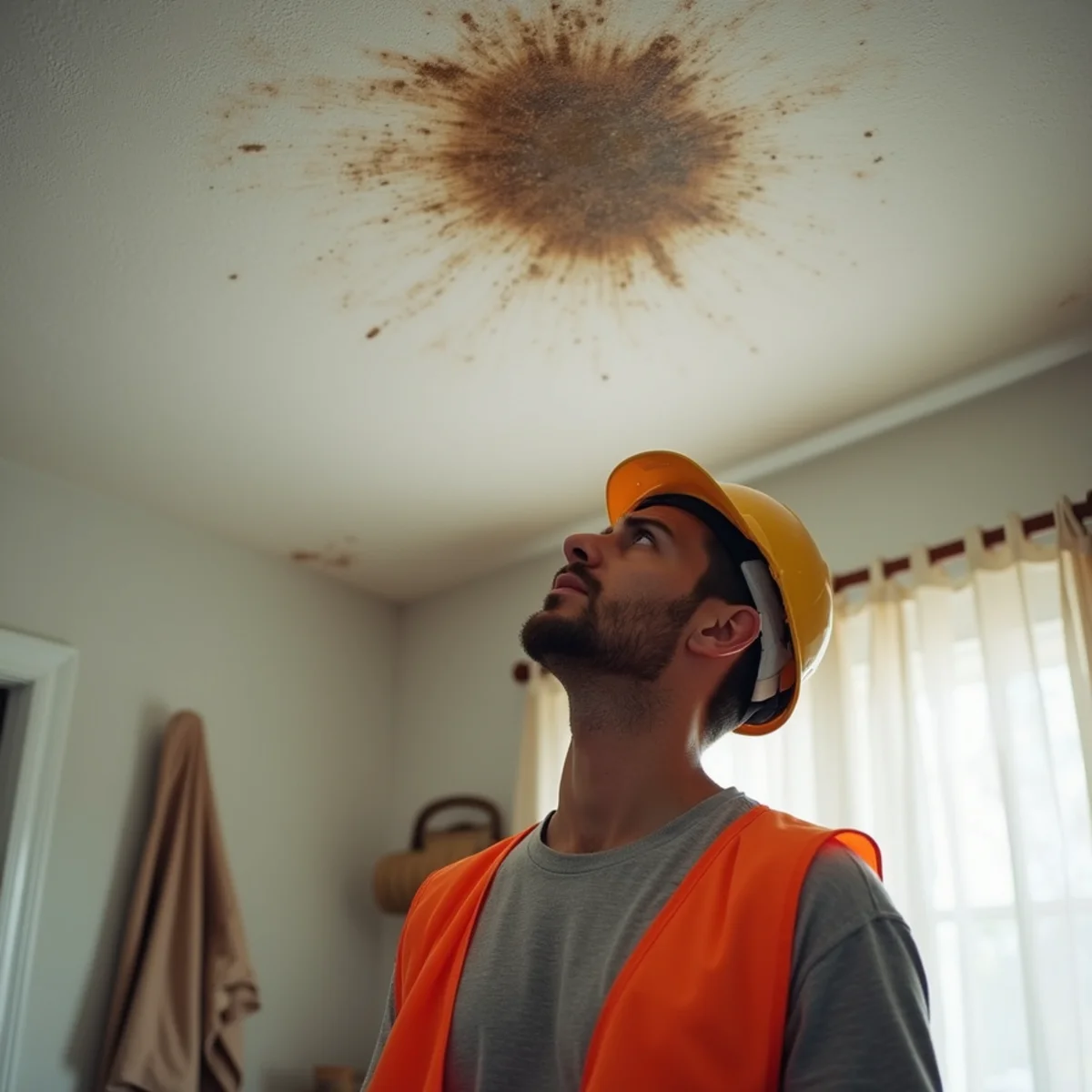
Here is the thing homeowners get wrong every single time. The wet spot on your ceiling is where water lands. It is not where water got in.
Water comes through a gap in the roof, hits the deck, and runs downhill along the plywood or a rafter until it hits a seam, a nail, or a light fixture. Then it drops. That entry point can be six feet away from the stain, or on the other side of the room. This is why chasing a leak yourself with a tube of roof cement usually fails. You seal the spot above the stain, the next storm comes, and it leaks again from the same real source you never found.
Tracing a leak back to its true origin is most of the job. It takes someone up top who knows where these roofs fail and can read the water trail underneath. That is the first thing our crew does on a leak call.
Flashing and penetrations: where Brevard roofs really leak
If we had to point at one culprit, it is the spots where something pokes through your roof. Roofers call these penetrations. Every one of them is a hole that was sealed at install, and every seal has a clock on it.
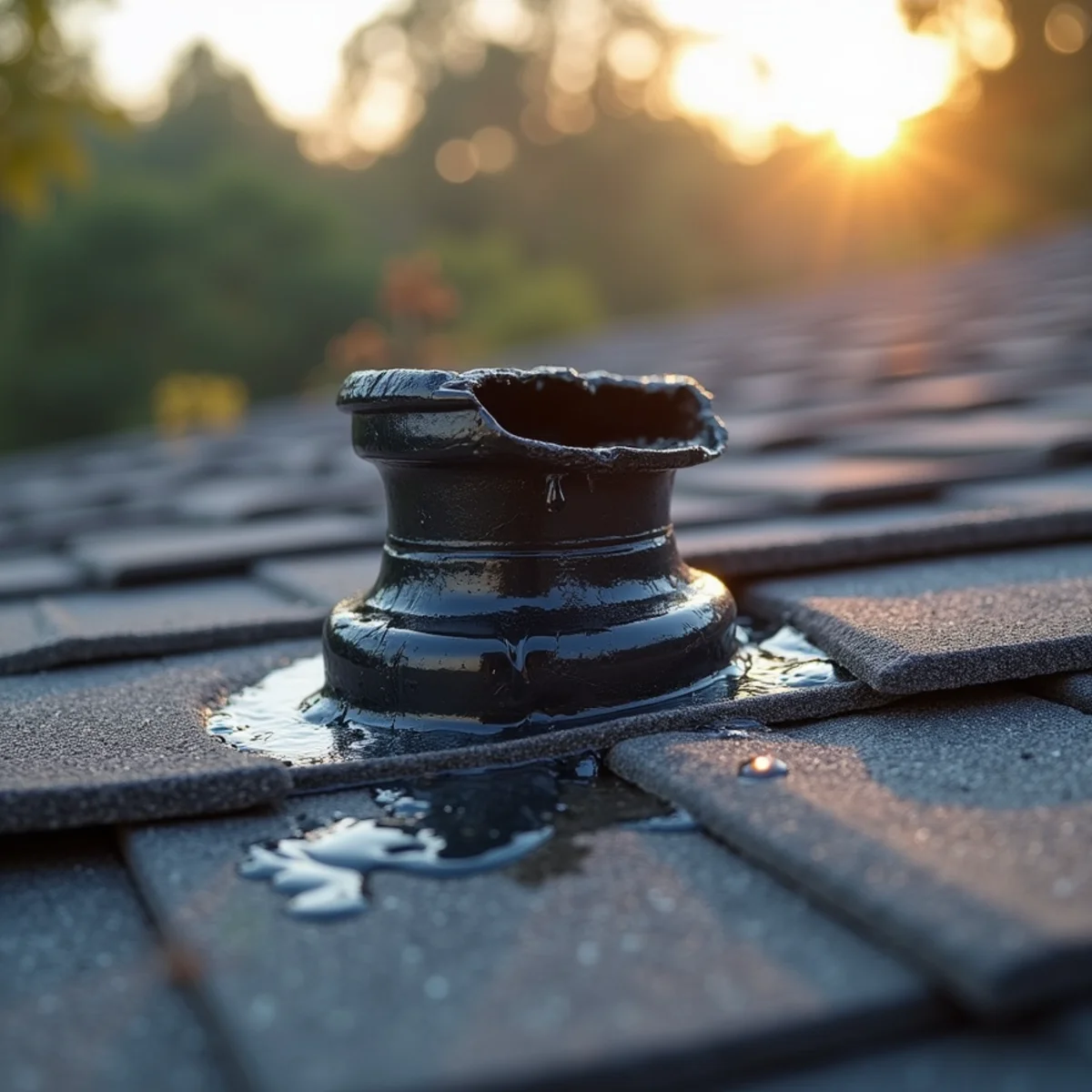
- Plumbing vent boots. That rubber collar around the pipe sticking up from your roof is the single most common leak we find here. Florida sun cooks the rubber until it cracks, usually somewhere between year eight and year twelve. The shingles around it can look brand new while the boot is split wide open.
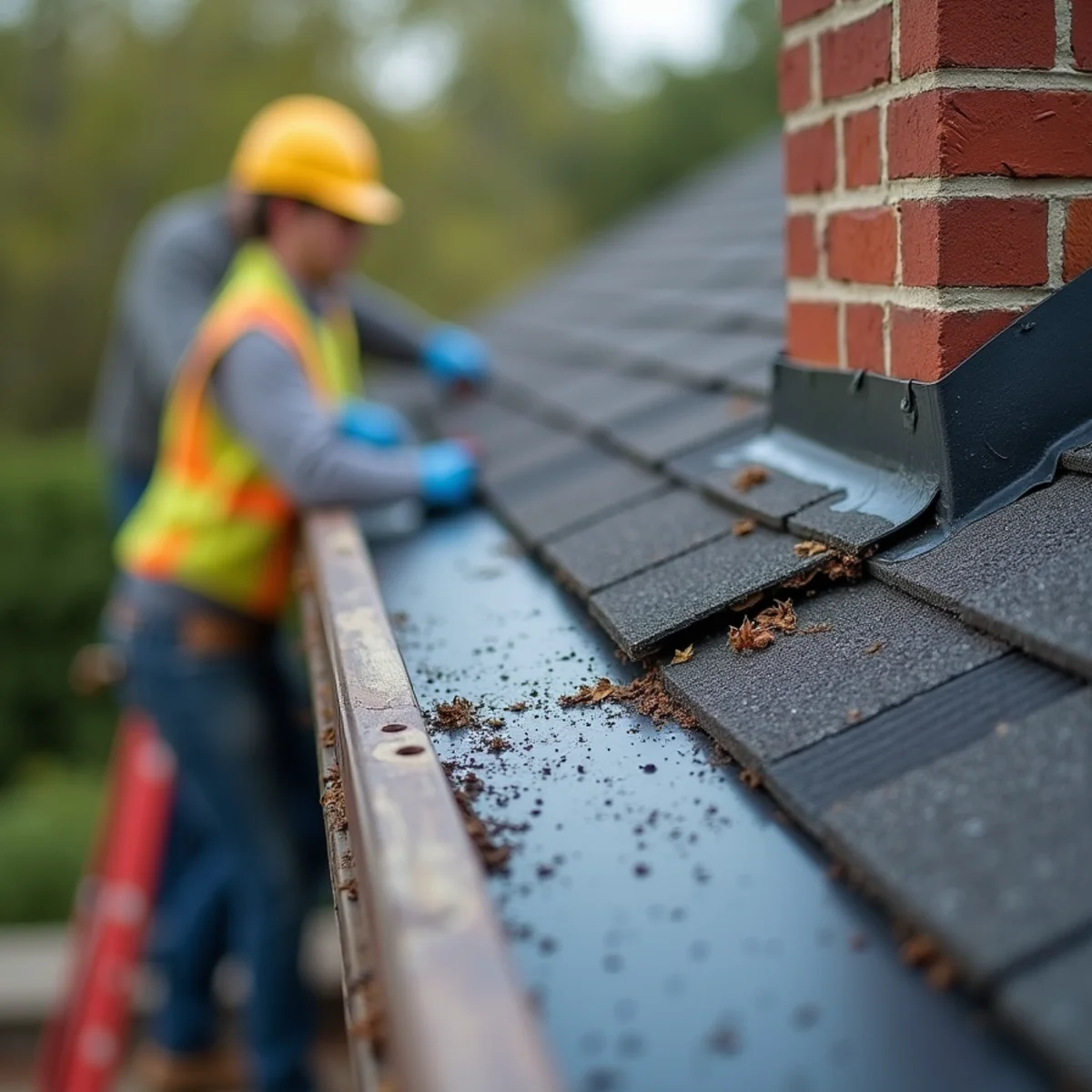
- Chimney and wall flashing. Where the roof meets a vertical surface, thin metal flashing bridges the gap. The sealant along it dries out, shrinks, and pulls away under our UV. Reused or sloppily installed flashing from a past cheap repair is one of the top reasons a roof starts leaking years before it should. Our flashing repair work is a big part of what we do.
- Skylights. Beautiful until the seal fails. The frame and the flashing kit around a skylight both age, and a leak here dumps straight into the room below. We handle skylight repair and reseals.
- Valleys. Where two roof planes meet, all the runoff funnels through. That channel takes the most water on the whole roof, so any weakness there shows up fast during a hard rain.
The pattern holds across Brevard. The field of the roof, the wide open shingle area, usually is not the problem. The problem is the transitions and the things sticking through.
Wind and missing shingles
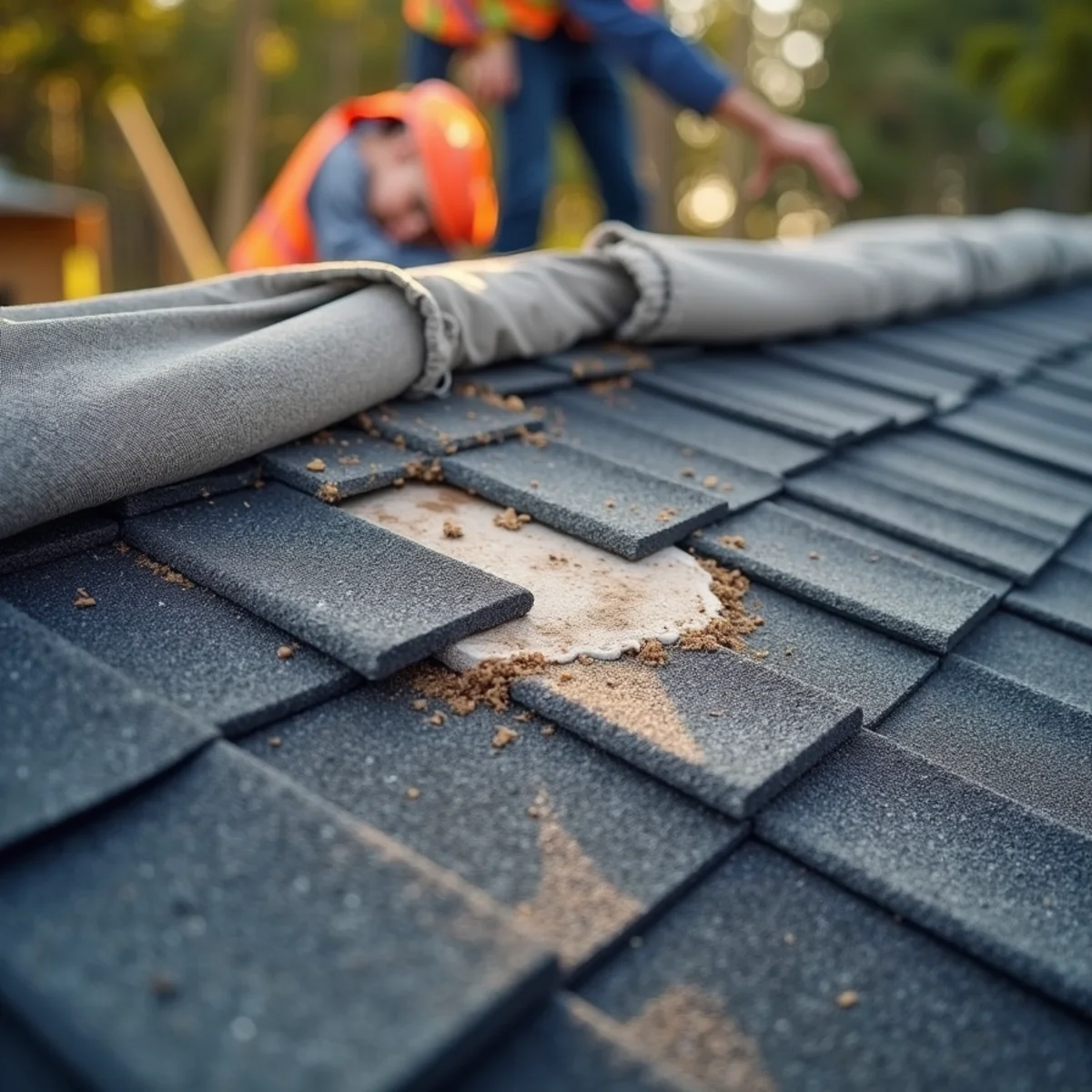
Our other big cause is wind. It does not take a hurricane. A regular Space Coast thunderstorm can gust hard enough to catch the edge of an asphalt shingle and peel it back or tear it off. Once a shingle is gone, the underlayment and the wood deck underneath are exposed, and the next rain has a clear path in.
You will not always see missing shingles from the ground. They land in the yard, blow into a neighbor's, or lift and re-seat crooked without ever detaching. After any strong storm it is worth a look, and worth a call for a storm damage roof repair check if you saw debris come down. If a named storm came through, that inspection matters even more, because it ties any damage to a dated weather event for insurance.
Age, UV, and salt air
Roofs here do not last as long as the brochure says. An asphalt shingle roof rated for the national average often gives you noticeably less on the Space Coast. Constant UV bakes the oils out of the shingle until it turns brittle and the protective granules wash off into your gutters. Salt in the air corrodes metal fasteners, drip edge, and flashing faster than it would inland, especially closer to the water in areas like Merritt Island, Cocoa Beach, and the barrier island side of things.
An aging roof does not fail all at once. It gets brittle, cracks form, sealant lets go, and the leaks start showing up in ones and twos. When the whole roof reaches that point, patching stops making sense and a full roof replacement is the cheaper long-term call. If your roof is closing in on that age, a straight assessment from us will tell you which side of the line you are on.
The stuff people forget: gutters, ventilation, and condensation
Not every leak comes through the roof surface. A few sneaky ones:
- Clogged gutters. When gutters pack full of leaves and shingle grit, water backs up under the roof edge instead of draining away. That rots the fascia and finds its way inside. A gutter cleaning a couple times a year is cheap insurance against this.
- Bad attic ventilation. Our heat and humidity are brutal on an attic. Without proper airflow, moisture builds up, condenses on the underside of the deck, and drips down looking exactly like a roof leak. It also cooks your shingles from below and shortens the whole roof's life. This is what roof ventilation repair fixes.
- Rotted soffit and fascia. The boards along your eaves take on water from overflowing gutters and wind-driven rain. Once they go soft, they stop keeping water out. We do soffit and fascia repair as part of sorting out edge leaks.
Tile, metal, and flat roofs each leak differently
Brevard has a mix of roof types, and each one fails in its own way.
Tile roofs, common on the nicer stucco homes around here, leak through the underlayment more than the tile itself. The tile sheds most of the water, but the real waterproof layer is the felt or membrane underneath, and that is what breaks down with age. A cracked or slipped tile lets water pound that underlayment directly. Tile roofing repair means getting under the tile to the layer that actually matters.
Metal roofs hold up well against our salt and sun, which is why they are popular on the coast, but they leak at the fasteners and seams. Screws back out over years of thermal expansion, and the rubber washers under them harden and crack. Metal roofing leaks are usually a fastener and seam job, not a whole-roof problem.
Flat and low-slope roofs, which you see on a lot of Brevard commercial buildings and some homes, live and die by their seams and drainage. Water that sits instead of running off will find any weak seam eventually. Our flat roofing crew handles those.
What to do the moment you spot a leak
Move fast. The gap between a small repair and a big one is often just a few weeks.
- Protect what is under it. Move furniture, pull up rugs, put a bucket down. If the ceiling is bulging with trapped water, poke a small hole to drain it into a bucket. That sounds backward, but a controlled drain beats a whole section of drywall collapsing.
- Photograph everything. The ceiling stain, any dripping, wet insulation, damaged belongings, and the outside of the roof if you can safely see it from the ground. Timestamped photos matter for insurance.
- Do not climb up in the rain. Wet Florida roofs are dangerous and you probably will not find the real source from up there anyway. Wait it out or call us.
- Call for an inspection. The sooner someone finds the true entry point, the smaller the fix. We offer free inspections and written estimates, and we run emergency roof repair around the clock if water is actively coming in.
Insurance and the clock you are on
If your leak came from a storm, timing matters in Florida. There is a limited window to file a property insurance claim tied to a dated weather event, and it is shorter than it used to be. The longer you wait, the easier it is for an insurer to argue the damage came from age or neglect instead of the storm.
We document storm damage thoroughly to support your claim, with the dated photos and the detailed findings an adjuster wants to see. To be clear about what we do and do not do: we put the evidence together and we hand you a solid report. We do not file the claim, negotiate with your carrier, or promise an outcome. That part is between you and your insurer. Our insurance claim assistance is about giving you the strongest possible documentation. If a hurricane is involved, our hurricane roof damage repair team handles both the fix and the paperwork side.
Stop leaks before they start
The cheapest leak is the one that never happens. A couple of habits go a long way on the Space Coast:
- Get a roof inspection once a year, and again after any major storm. Spring, before hurricane season ramps up, is the ideal time.
- Keep gutters clear so water drains instead of backing up under the edge.
- Have vent boots, flashing, and sealant checked as your roof ages past the ten-year mark. Those are the first things to go here.
- Sign up for roof maintenance so small issues get caught while they are still cheap fixes.
Regular attention is the difference between a $300 vent boot swap and a $5,000 job that includes new decking and a fresh drywall ceiling.
Talk to a local roofer
We are Align Roofing Service, based right here at 688 S Park Ave in Titusville, and we handle roof leaks all over Brevard County. If you have a stain on the ceiling, a missing shingle, or you just want peace of mind before the next storm, we will come out, find the real source, and tell you straight what it needs. We do both residential roofing and commercial roofing, we offer financing, and the inspection and written estimate are free.
Call us at (209) 758-8550 to book your free inspection. The sooner we find the leak, the less it costs you.
Frequently Asked Questions
Why does my roof only leak sometimes and not every rain?
The stain on my ceiling is small. Can I just wait and watch it?
How long do roofs actually last in Brevard County?
Will my homeowners insurance cover a roof leak?
Do you handle emergency leaks after hours?
How do you find where the leak is really coming from?
Written by Align Roofing Service
A local roofing contractor in Titusville, FL. We help homeowners across Brevard County with honest repair-or-replace advice, free inspections, and 24/7 emergency service.
Back to all articles