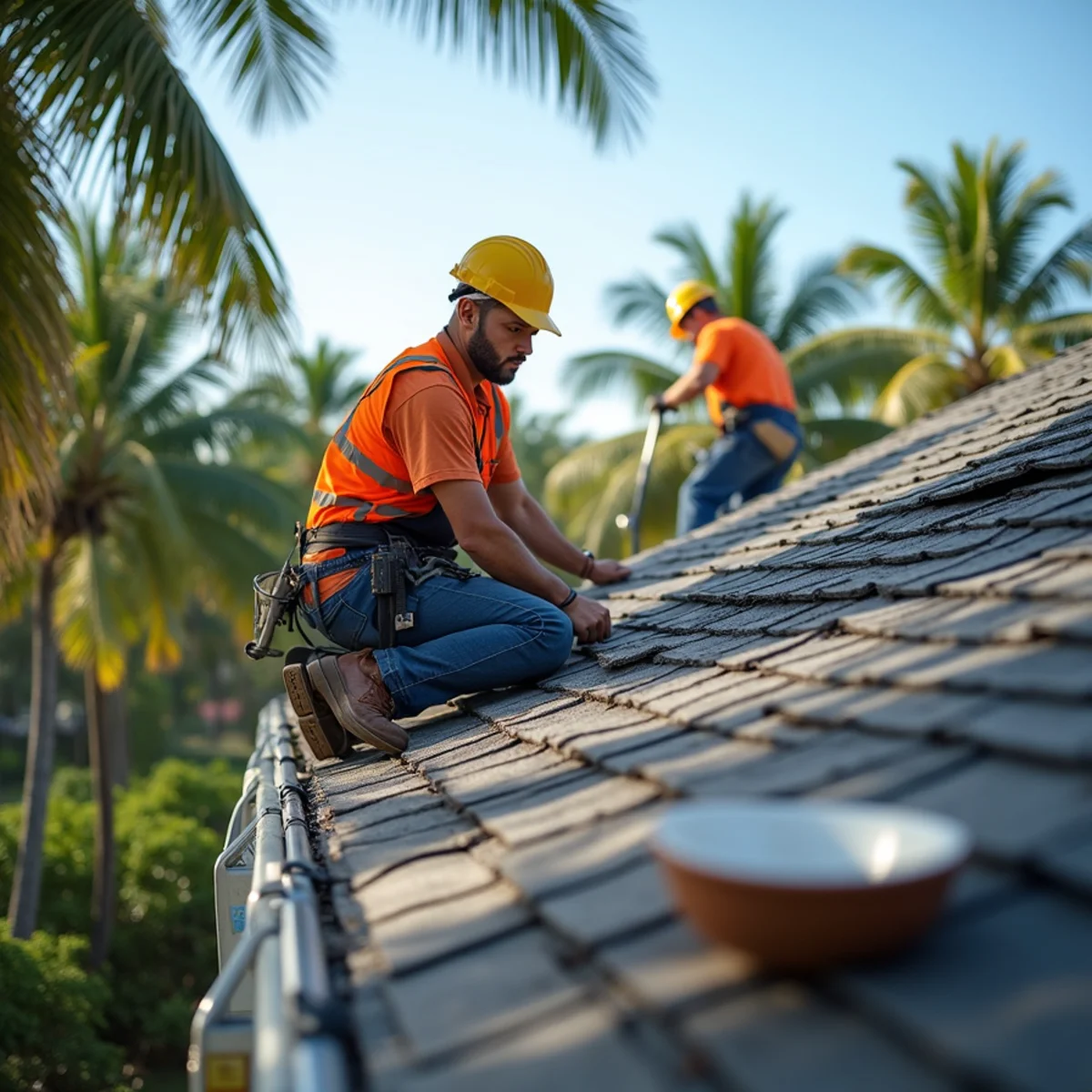
Hurricane Roof Damage Repair in Titusville, FL
A hurricane does not always tear the whole roof off. More often it lifts a few rows of shingles, pushes water under the flashing, and leaves you with a slow leak that shows up on the ceiling a week later. By then the attic insulation is soaked and the decking is going soft. That is the kind of damage we see most on the Space Coast after a storm moves through.
We are based right here in Titusville at 688 S Park Ave, so we are not driving in from another county when a storm hits. Once your roof is safe to walk, we get up there, find where the wind actually got in, and stop the water. If it is coming in right now, we tarp and stabilize first, then come back for the full repair.
We also write up what we find with dated photos, so you have what you need if you decide to file an insurance claim. We do not file or negotiate the claim for you. We just make the roofing side of it clear and simple.
Repair or Replace After a Hurricane: How to Decide
The first thing most Titusville homeowners want to know after a storm is whether they need a patch or a whole new roof. The honest answer comes down to three things: how much of the roof is actually damaged, how old it already was, and what your insurance will support.
A repair makes sense when the damage stays in one area. A dozen shingles peeled off the windward slope, a run of lifted ridge cap, a bent piece of flashing around the chimney, one cracked field of tile. If the rest of the roof is sound and has real life left in it, fixing the damaged spot is the right move. That is normal roof repair or storm damage roof repair work.
Replacement comes to the front when the damage is spread across several slopes, when the deck underneath is wet or rotted, or when the roof was already near the end of the road. A 3-tab shingle roof at 18 years that loses half its shingles is not a repair candidate. You would be patching a roof that was about to fail anyway. In a case like that, a full roof replacement is the smarter money, and it resets the clock on your coverage.
There is a middle ground people miss. Sometimes a roof that looks mostly fine has a beat-up deck or soaked underlayment from wind-driven rain. The shingles are hanging on, but the layer below them is done. That is why a real inspection tells you more than a look from the curb. We check the deck, the underlayment, the flashing, and the ventilation, not just the surface.
The Florida 25% Rule, in Plain Terms
Florida changed its roofing rules in 2022. Before that, if more than 25% of a roof was damaged, the whole thing usually had to be replaced. Now, if your roof was built or recoated to the 2007 code or later, the insurer can require the damaged section to be repaired instead of paying for a full tear-off. The 25% threshold is still there, but it gets applied per roof section, and the carrier has more say than it used to.
What that means for you is that roof age and build date drive the outcome as much as the damage does. An older roof built before that code cutoff gets treated differently than a newer one. We document the roof so the facts are clear either way, and we walk you through what a fair scope looks like. We photograph and write up storm damage to support your claim, but we do not file or negotiate it for you. For the claim side, our insurance claim assistance page lays out where we help and where an adjuster or public adjuster takes over.
What Brevard County Does to Roofs Before the Storm Even Hits
Hurricanes get the headlines, but roofs on the Space Coast are worn down long before a named storm shows up. That matters, because a weakened roof gives out at lower wind speeds.
Salt air is the quiet one. If you live on Merritt Island or near the Indian River in Titusville, salt eats away at exposed metal. Old galvanized nails, cheap flashing, and vent collars rust and let go. When the wind pulls on a shingle that is held by a corroded nail, the wind wins. Corrosion-resistant flashing and ring-shank nails hold up far better out here.
The UV never lets up either. Florida sun bakes asphalt shingles, dries out the sealant strips that glue each course down, and leaves older shingles brittle. A shingle that has lost its seal will lift in a gust that a sealed roof would shrug off. It is why a roof that made it through one season can come apart the next.
Then there is the summer storm cycle. We get near-daily afternoon thunderstorms from June through September, with hard rain and gusty microbursts long before any hurricane forms. Those storms find every weak spot: a loose ridge, a failed pipe boot, a gap in the flashing. By the time hurricane season peaks, plenty of roofs are already leaking in small ways the owner never noticed.
What Drives Cost and Timeline on a Storm Repair
There is no honest flat price for hurricane roof repair, because the range is huge. A few blown-off shingles and a resealed vent is a small job. A repair that means replacing wet decking, re-flashing a valley, and matching discontinued tile is a much bigger one. Here is what actually moves the number:
- How much decking is wet or rotted. Replacing plywood underneath is the single biggest swing in a repair. You cannot see it until the old material comes off.
- Material matching. Old shingle colors get discontinued, and tile profiles get hard to find. Matching an existing tile roof can cost more than the labor to install it.
- Access and slope. Steep or high roofs, and homes with tight lot access, take longer and need more setup.
- Flashing and penetrations. Chimneys, skylights, and pipe boots are where leaks start. Doing them right takes time.
Timeline is a two-part story. Emergency stabilization, meaning a tarp or a temporary dry-in, can happen fast, often the same day for our emergency roof repair calls. The permanent repair depends on materials and, if a claim is in the mix, on the adjuster's schedule. After a major hurricane, everybody in Brevard is calling roofers and suppliers at once, so lead times stretch out. Getting your inspection and documentation done early puts you ahead of that rush.
Getting the Emergency Response Right
The hours right after a storm decide how bad the inside damage gets. Water that sits in an attic overnight ruins insulation, drywall, and framing that the wind never even touched. A proper tarp, anchored and lapped so it actually sheds water, buys you time without making things worse. A bad tarp job, nailed flat with no slope, funnels water straight into the house.
Do not send anybody up a wet roof to check it. Take photos from the ground with what you can see, note the date of the storm, and call for a real inspection. We run 24/7 emergency service for exactly this window, and we photograph the damage before we cover it, so nothing gets hidden under the tarp when the adjuster comes.
Common Mistakes We See After Storms
The biggest one is waiting. Small leaks turn into rotted decking and mold over a few weeks, and a delayed claim gets harder to prove. The second is letting a storm-chaser crew from out of state do a quick patch and disappear. When that repair leaks next season, they are gone, and so is anyone to hold responsible. We are based here at 688 S Park Ave in Titusville and we stay reachable.
The third mistake is treating the visible damage as the whole story. Wind lifts shingles and sets them back down, so a slope can look fine while the seal is broken underneath. That is why we check ventilation, flashing, and the roof leak history, not just what blew off. A roof inspection after any strong storm is worth doing even if the roof looks fine from the driveway. And before the next season, a wind mitigation inspection can both harden the roof and lower your premium.
If a storm hit your home anywhere from Titusville to Cocoa, call Align Roofing Service at (209) 758-8550 for a free inspection and a free written estimate. We will tell you straight whether you need a repair or a replacement, and we will document everything to support your claim. Financing is available if the out-of-pocket cost is a hurdle.
What This Service Covers
Emergency tarping and stabilizing
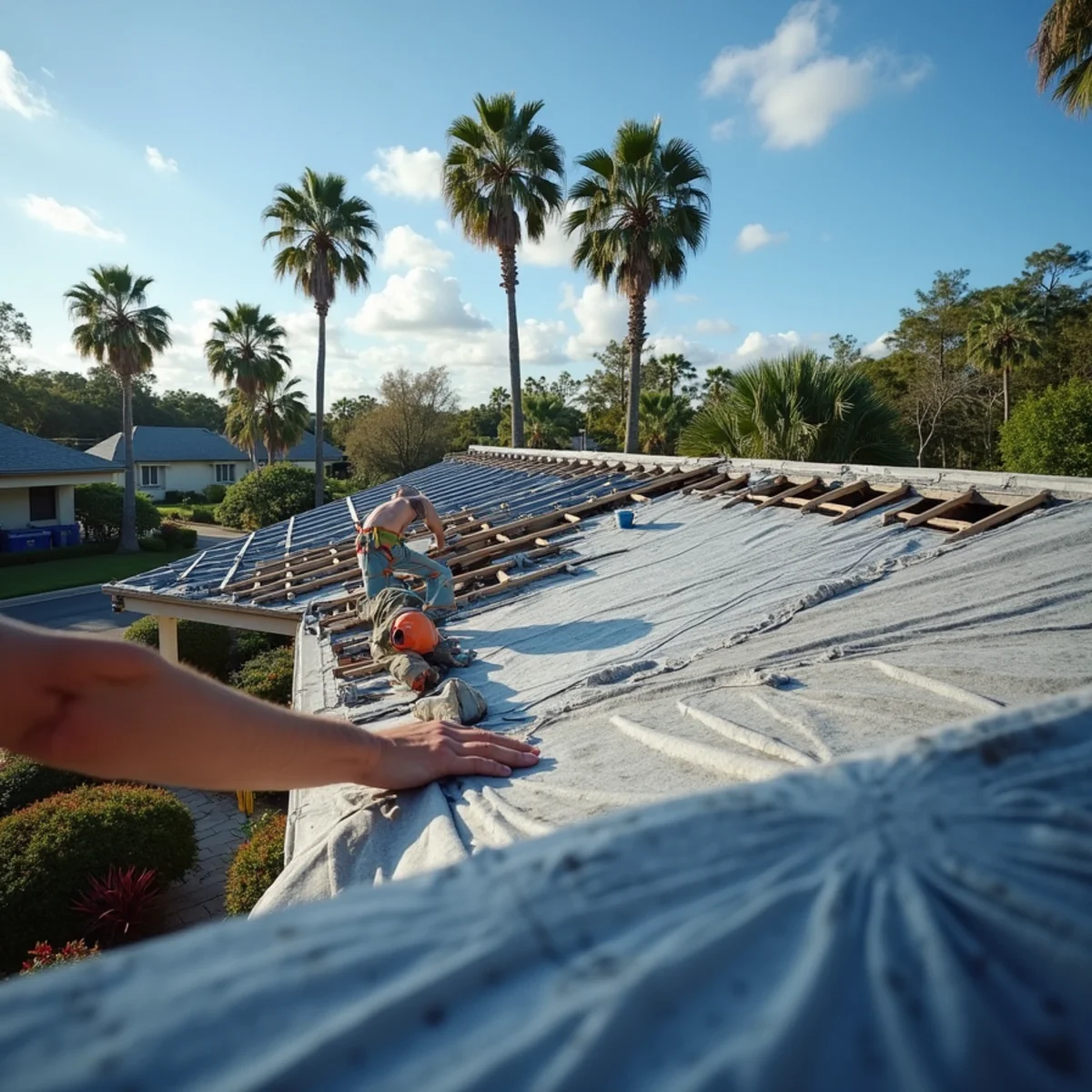
When water is coming in during or right after a storm, the first job is stopping it. We cover the open areas with tarp, secure loose sections, and keep more water out of your home while we plan the repair. This is part of our 24/7 emergency service.
Full storm damage inspection
We get on the roof and check the parts you cannot see from the ground. Lifted and creased shingles, torn flashing, damaged vents and boots, loose ridge caps, and soft spots in the decking. We look in the attic too, since water tracks a long way from where it gets in.
Wind and water damage repair
We replace missing and broken shingles, reseal and reflash the trouble spots, fix damaged vents and skylights, and repair or replace decking where the wood has gone soft. The goal is a roof that is watertight again and ready for the next round of weather.
Photo documentation for your claim
We take dated photos and notes of the storm damage while we are up there. If you file a claim, you have a clear record of what happened, and we can meet your adjuster on site to point out what we found. We support the claim. We do not handle it for you.
Repair or replace guidance
Sometimes a storm finishes off a roof that was already near the end. We tell you straight whether a repair makes sense or whether you are better off replacing, and why. Financing is available if a full replacement is the right call.
Signs You Need Hurricane Roof Damage Repair
- Shingles in your yard or driveway after a windstorm
- New water stains on the ceiling or running down an interior wall
- Shingles that look lifted, curled, or creased when you look up at the roof
- Missing or bent ridge caps along the peak of the roof
- Torn or loose flashing around chimneys, skylights, or roof valleys
- Granules from the shingles piling up in the gutters or at the downspout
- Daylight or damp spots in the attic after heavy rain
How It Works
- 1
Call us, day or night
Tell us what you are seeing. If water is coming in, we run 24/7 emergency service and move you to the front of the line for tarping.
- 2
We inspect once it is safe
After the weather passes we get on the roof, check the attic, and take dated photos of every bit of storm damage we find.
- 3
You get a written estimate
Clear scope, clear price, and a straight recommendation on repair or replacement. Nothing verbal that grows later.
- 4
We do the repair
We stop the leaks, replace damaged materials, and use products built for Florida wind and sun. We keep the site clean each day.
- 5
We walk it with you
You see the finished roof and the photos of what we fixed before we call the job done, along with the documentation for your claim.
Hurricane Roof Damage Repair Across Brevard County
We handle hurricane roof damage across Titusville and all of Brevard County, from Mims and Port St. John down through Cocoa, Merritt Island, and the beaches.
Hurricane Roof Damage Repair FAQs
Should I repair or replace my roof after a hurricane?
Will my insurance pay for a full replacement or just a repair?
How much does hurricane roof damage repair cost in Titusville?
What should I do in the first 24 to 48 hours after a storm?
How long do I have to file a hurricane roof claim in Florida?
Does Align Roofing handle the insurance claim for me?
My roof looks fine after the storm. Do I still need an inspection?
Why do salt air and Florida sun matter for hurricane damage?
You Might Also Need
Storm Damage Roof Repair
Inspection and repair after wind, rain, and debris.
Learn moreEmergency Roof Repair
24/7 tarping and repair when water is coming in now.
Learn moreRoof Leak Repair
Find where water really gets in, then stop it.
Learn moreWind Mitigation Inspection
Document roof features that may lower your insurance.
Learn moreTrusted by Local Homeowners
Had a brown stain spreading across the ceiling after the last round of summer storms. They came out for a free inspection, tracked it to lifted shingles near the ridge, and had it patched within the week. Straight answer, fair price.
We were sure we needed a full replacement. They pulled up on the roof, showed me photos on their phone, and told me a repair would carry us a few more years. I appreciated not getting pushed into something I did not need yet.
Full tear off and replacement done in a few days. The crew swept the yard for nails every evening and left it cleaner than they found it. The new roof handles the salt air and heat a lot better than the old one.
Ready to Get Started With Hurricane Roof Damage Repair?
Book your free inspection and written estimate today.