
Roof Flashing Repair in Titusville, FL
Flashing is the thin metal that seals the seams and edges of your roof. It sits where two surfaces meet, around the chimney, along valleys, at skylights, and where a wall runs into the roofline. Shingles get most of the attention, but flashing is where a lot of Titusville leaks actually start.
When flashing lifts, cracks, or rusts through, water sneaks in behind it and travels. You might see a stain on the ceiling three feet from where the water got in. By the time it shows up inside, the leak has usually been going for a while. That is the frustrating part about bad flashing. It hides.
Align Roofing Service is based right here in Titusville, and we chase these leaks down for a living. We find where the water is really getting in, fix the flashing correctly, and show you photos of what we found. Free inspection, written estimate, and no pressure to sign anything.
Why Flashing Gives Out First on the Space Coast
Flashing is the thin metal that seals the joints and edges of a roof. It never gets the credit, but it does most of the work. The field of shingles or tile sheds water fine on its own. The trouble starts where the roof meets a wall, a chimney, a skylight, a plumbing vent, or a valley where two slopes drain together. Those are the seams, and flashing is what keeps them dry.
Here in Titusville and across Brevard County, flashing takes a beating that inland roofs never see. Salt drifts in off the Indian River and the Atlantic and settles on metal all day long. Cheap aluminum or unprotected steel corrodes from the edges in, and once the coating is gone the pitting spreads fast. Add the daily UV load, the afternoon heat swings that make metal expand and contract, and the wind-driven rain that rides in with every summer storm. You end up with sealant that dries out, fasteners that back out, and metal that lifts. That is why flashing, not the shingles, is the number one source of roof leaks we find on the Space Coast.
Repair or Replace: How We Actually Decide
The honest answer depends on the metal, the sealant, and what is underneath. Here is how we think it through once we are on the roof and looking at it.
When a spot repair makes sense
If the flashing itself is sound and the failure is at the seal, a targeted repair is the right call. Sealant has a shorter life than metal. If the counterflashing at a chimney has pulled loose but the metal is still solid, we reset it, replace the sealant with a proper polyurethane or roofing-grade product, and refasten it. If a single pipe boot has cracked, we swap the boot. That is a same-day fix in most cases, and it is money well spent when the rest of the flashing has life left.
When replacement is the smarter money
If the metal is corroded, cracked, or was put on wrong the first time, resealing it just delays the leak. Surface caulk over rusted flashing is a patch that fails again in a season or two. The bigger tell is the roof around it. Step flashing is woven into the shingles course by course. You cannot pull and replace it properly without lifting shingles, so if the roof is near the end of its life anyway, doing the flashing during a full roof replacement is the cleaner and cheaper path overall. We tell you straight which situation you are in. If your roof has years left, we fix the flashing and leave the rest alone.
Flashing Materials and What Holds Up Here
Not all flashing metal is equal, and coastal Florida punishes the wrong choice.
Aluminum is common and affordable, and it does not rust the way steel does, but bare aluminum still corrodes in salt air and it is soft enough to dent and lift in high wind. Galvanized steel is stronger, but the zinc coating is what protects it. Once that wears through near the coast, the steel underneath rusts quickly. Copper and lead-coated copper last for decades and shrug off salt air, which is why you see them on higher-end and historic work, though they cost more up front. For most Brevard homes we spec corrosion-resistant flashing matched to the exposure, and we do not reuse old metal that is already pitted just to save a few dollars. The metal is the cheap part of the job. Doing it twice is what costs you.
The Details That Separate a Real Fix From a Patch
Most flashing leaks we get called for trace back to the same handful of shortcuts. A proper repair deals with all of them.
Step flashing has to be layered, one piece per shingle course, so each piece overlaps the one below it and sheds water down the wall. When someone runs a single bent strip of metal up a wall and caulks the top, it looks fine for a while and then funnels water behind the siding. Chimneys need two parts working together. Base or step flashing ties into the roof, and counterflashing sits in a cut groove in the masonry above it. Counterflashing that is only surface-caulked to brick is the most common chimney leak we see. On the uphill side of a chimney, a cricket or saddle sends water around it so debris and water do not pool against the back wall.
Valleys need to stay open and clean. Nail placement matters too. Fasteners driven through the water path instead of high and covered will leak eventually, storm or no storm. And every flashing repair should sit on sound decking. If we lift a section and find soft or rotted plywood underneath, that gets replaced before anything goes back down, which ties flashing work closely to roof leak repair and, when the rot has spread, to roof repair on the area around it.
What Drives Cost and Timeline
A single pipe boot or a short section of reset counterflashing is a small, fast job. Costs climb with access and complexity. A two-story roof, a steep pitch, or a chimney that needs custom-bent metal and fresh mortar joints all add labor and time. The big variable is what we find once we open things up. If water has been getting in for a while, you may be looking at replacing decking or wet underlayment, and that changes the number. This is why we start with a free inspection and give you a free written estimate before any work begins, so nothing catches you off guard. Most straightforward flashing repairs wrap up in a day. We can also fold flashing work into a broader roof maintenance visit if you want the whole roof checked at once.
Storm Damage and Insurance
Wind is the enemy of flashing. A strong gust can peel back a drip edge or lift a section of step flashing, and once the seal is broken the next rain finds the gap. After a named storm we get a lot of calls that turn out to be flashing that let go. If your leak followed a storm, document it early. We photograph and document flashing and storm damage to support your insurance claim, though we do not file or negotiate the claim for you. For active leaks that cannot wait, our emergency roof repair team is available 24/7, and for wider wind damage we handle full storm damage roof repair as well.
We are based right here at 688 S Park Ave in Titusville and work throughout Titusville, Mims, and the surrounding Space Coast. If you have a stain on the ceiling, rust in a valley, or caulk cracking around your chimney, get it looked at before the next storm makes it worse. Call Align Roofing Service for a free inspection and a free written estimate.
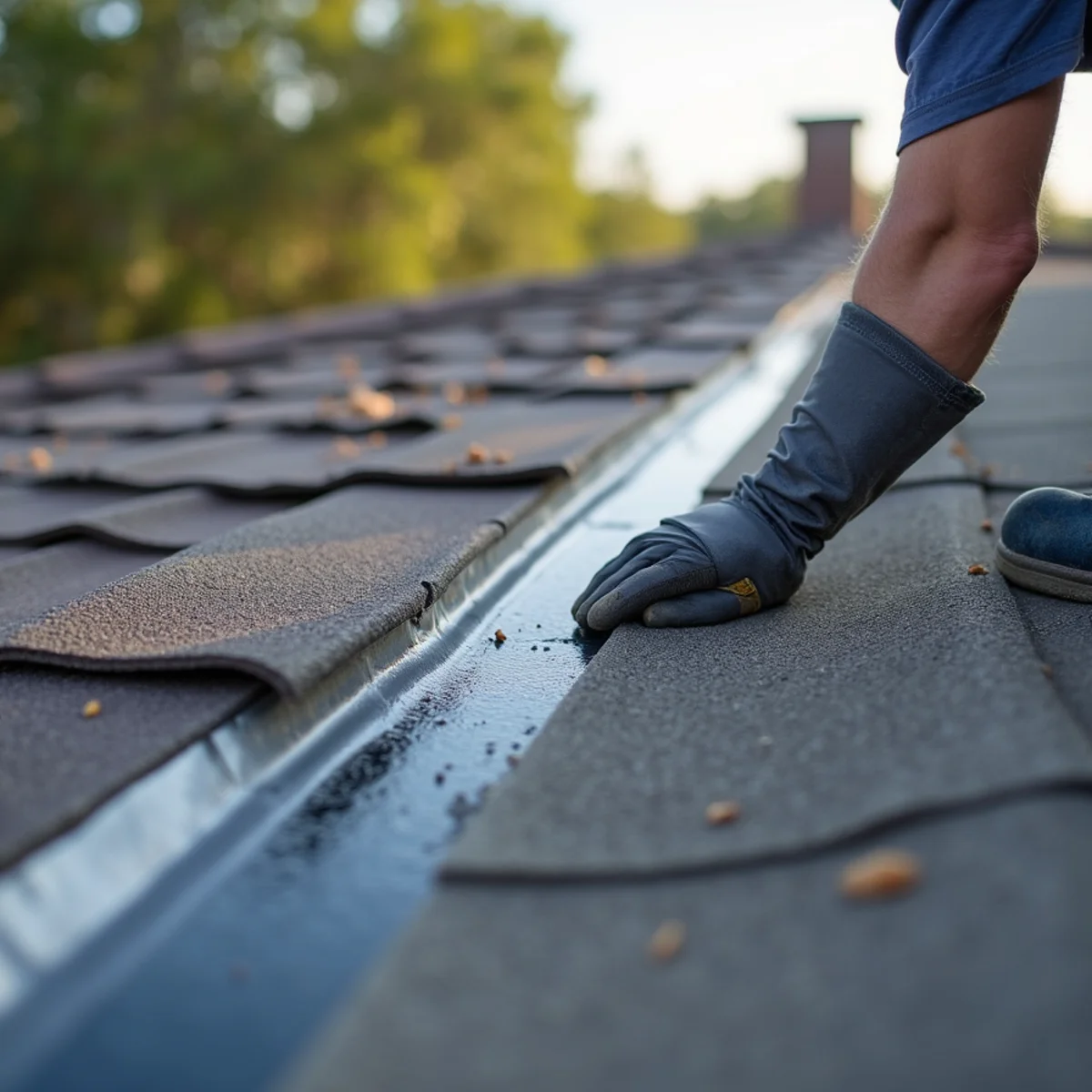
What This Service Covers
Chimney flashing
The chimney is one of the most common leak points on any roof. We reseal or replace the step flashing and counterflashing where the chimney meets the shingles, and we redo cracked mortar joints and old caulk that has dried out and pulled away.
Skylight flashing
Most skylight leaks are not the glass, they are the flashing around it. We reflash and reseal the frame so water runs off the way it should. If the unit itself is shot, we can talk through replacement too.
Valley flashing
Valleys carry a huge amount of water during a Florida downpour. When the metal in a valley rusts, dents, or comes loose, water backs up under the shingles. We repair or replace valley flashing so it drains clean.
Wall and sidewall flashing
Anywhere the roof meets a vertical wall, dormer, or second story, flashing has to tuck behind the siding and over the shingles. We fix loose or short flashing at these spots, which are a frequent source of slow, hidden leaks.
Vent, pipe, and penetration flashing
Plumbing vents, exhaust fans, and other roof penetrations use boots and collars that dry out and split in the Florida sun. We replace failed pipe boots and reseal the flashing around every penetration on the roof.
Drip edge and step flashing
Along the eaves and rakes, drip edge and step flashing guide water into the gutters instead of behind the fascia. We repair or replace these edge details when they lift or corrode from years of salt air and rain.
Signs You Need Flashing Repair
- A ceiling or wall stain near a chimney, skylight, or interior wall
- Water dripping around a fireplace or along a dormer during heavy rain
- Visible rust, cracks, or gaps in the metal around roof penetrations
- Caulk or sealant that has dried out, cracked, or peeled away from the flashing
- Loose or lifted metal along a valley or roof edge after a windstorm
- Dark streaks or peeling paint on the wall below a roof-to-wall joint
- A musty smell or damp spot in the attic near the chimney or a skylight
How It Works
- 1
Tell us what you are seeing
Call or request an estimate and describe the stain, drip, or damage. If water is actively coming in, let us know so we can move you up the schedule.
- 2
We inspect the roof
We get up there and check every flashing point, the chimney, skylights, valleys, walls, and penetrations, to find where the water is really getting in. We take photos along the way.
- 3
You get a written estimate
We show you the photos, explain what failed, and give you a clear scope and price. If we spot a bigger problem than just flashing, we tell you straight.
- 4
We do the repair
We reflash, reseal, or replace the failed sections with the right metal and materials for Florida weather, and we clean up after ourselves.
- 5
We check it and walk it with you
We confirm the repair sheds water correctly, sweep up any debris, and go over what we did before we call the job done.
Flashing Repair Across Brevard County
We repair roof flashing across Titusville and the surrounding Brevard County communities, from Mims and Port St. John down through Cocoa, Rockledge, Merritt Island, and the beaches.
Flashing Repair FAQs
Is a leak around my chimney always a flashing problem?
Can you just reseal my old flashing instead of replacing it?
Why does flashing corrode so fast near the coast in Brevard?
How long does a flashing repair take?
Will my homeowners insurance cover flashing repair?
What happens if I ignore a small flashing leak?
Do I need new flashing when I get a new roof?
What are the first signs my flashing is failing?
You Might Also Need
Roof Leak Repair
Find where water really gets in, then stop it.
Learn moreRoof Repair
Fast fixes for leaks, lifted shingles, and worn spots.
Learn moreSkylight Installation & Repair
Reseal, reflash, or install skylights that stay dry.
Learn moreRoof Inspection
Free, honest look at your roof with photos.
Learn moreTrusted by Local Homeowners
Had a brown stain spreading across the ceiling after the last round of summer storms. They came out for a free inspection, tracked it to lifted shingles near the ridge, and had it patched within the week. Straight answer, fair price.
We were sure we needed a full replacement. They pulled up on the roof, showed me photos on their phone, and told me a repair would carry us a few more years. I appreciated not getting pushed into something I did not need yet.
Full tear off and replacement done in a few days. The crew swept the yard for nails every evening and left it cleaner than they found it. The new roof handles the salt air and heat a lot better than the old one.

Ready to Get Started With Flashing Repair?
Book your free inspection and written estimate today.