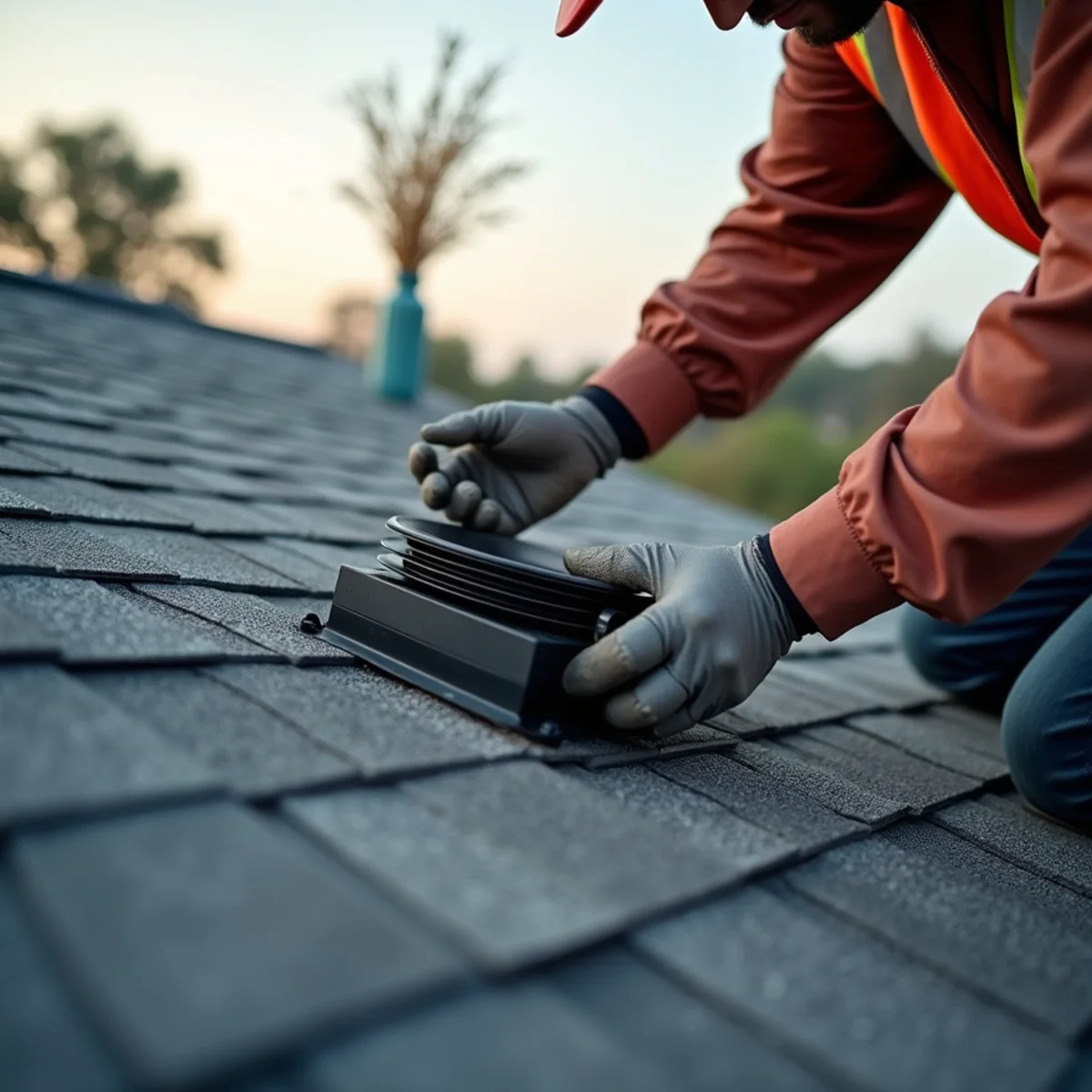
Roof Ventilation Repair in Titusville, FL
An attic that feels like an oven in July is not just uncomfortable. It is your roof telling you it cannot breathe. Hot, damp air gets trapped up there and bakes the underside of your shingles, warps the decking, and leaves moisture sitting in the one place you never want it. Around Titusville, with the heat and the humidity rolling off the Indian River Lagoon, this happens to more homes than folks realize.
Align Roofing Service fixes the airflow, not just the broken part you can see. We look at how air gets into your attic down at the eaves and how it leaves up at the ridge, find where the system is choked or missing pieces, and repair it so the roof runs cooler and drier.
Good ventilation is one of the cheapest ways to buy your roof more years and keep your power bill from creeping up. It is also easy to get wrong. Before you spend a dollar, we will show you what is actually going on up there.
Why Attic Ventilation Fails Faster on the Space Coast
Titusville sits right on the Indian River, and that spot does specific things to a roof. Salt in the air eats away at the metal parts of a vent. The sun bakes plastic vent housings until they crack. Summer humidity pushes damp air into the attic all day long, and if that air has nowhere to go, it condenses on the underside of the deck once things cool off at night. A ventilation system that would run twenty years in a dry climate can start giving out here in half that.
Most attics in Brevard County were built to a simple rule. Air comes in low at the soffits and leaves high at the ridge. When that flow stalls, everything below it pays for it. Shingles cook from underneath and shed their granules early. Plywood decking soaks up moisture and gets soft. Insulation mats down and quits doing its job. So the repair is rarely just swapping a broken vent. It is getting the whole intake-and-exhaust system moving again.
Intake and Exhaust Have to Match
This is the part almost nobody explains, and it is where most ventilation trouble actually starts. A roof needs roughly the same square inches of intake down low at the soffits as it has exhaust up high at the ridge or the roof vents. Builders and older roofers will add exhaust and forget the intake, or the intake gets blocked over the years and no one notices.
When exhaust outweighs intake, the ridge vent goes hunting for air wherever it can find it. Sometimes that is a bathroom fan duct. Sometimes it is the gaps around your can lights, which drags cooled air straight out of the house. Sometimes it pulls rain in through the ridge during a windy storm. That is why we count the net free area on both sides before we replace a single vent. If your soffits are painted shut, packed with insulation, or were never vented in the first place, adding more exhaust makes things worse, not better. A proper roof inspection checks both halves before anyone quotes you a price.
Powered Attic Fans Are Usually the Wrong Answer Here
Plenty of Titusville homes have an old powered attic fan, the kind that runs off a thermostat and roars away on hot afternoons. Homeowners figure more airflow has to be better. In Florida it often is not. If the attic leaks even a little at the ceiling plane, that fan pulls cold air-conditioned air up out of your living space and makes the AC work harder. It can also pull enough of a vacuum on the attic to backdraft a gas water heater in the garage, and that is a safety problem, not just a comfort one.
We usually push to fix the passive airflow first. Clear the soffits, run a continuous ridge vent, balance the two sides, and let the stack effect do the work with no electricity and nothing that can break. If you genuinely need a mechanical assist, a solar-powered gable fan with a humidistat beats a hardwired thermostat fan. Either way we will tell you straight which one your roof actually needs.
Repair or Replace the Ventilation System
You do not always need a full ventilation overhaul. Here is how we sort it out.
A repair is the right call when the roof itself is sound and only the vents have gone bad. Cracked plastic turtle vents, a torn pipe boot, a corroded turbine, or a run of ridge vent that blew loose in a storm are all simple swaps. This is the common one, and it often pairs with roof leak repair when the failed vent has already let water in.
A redesign is the right call when the airflow was never set up right to begin with. You see that in mildew on the underside of the deck, rusty nail tips dripping condensation, or a second floor that just will not cool down no matter how the AC runs. Here we do more than replace parts. We are adding intake, converting a handful of scattered box vents to a continuous ridge, or opening up soffits that got blocked.
A new roof changes the whole math. If your shingles are near the end anyway, the smart move is to fix the ventilation during a roof replacement instead of paying twice for roof access. New ridge venting, proper intake, and fresh flashing all go in together. Same goes if you are switching systems, since metal roofing and tile roofing each breathe their own way and do not vent like asphalt.
Ventilation Is Roof-Type Specific
Every roofing material vents differently, and a repair has to respect that.
On asphalt shingle roofing, a shingle-over ridge vent is the standard. It tucks under the cap shingles and disappears from the street. On tile, the air moves through specialized ridge closures and eave risers that let it travel under the tile itself. Metal roofs use vented ridge caps and often a panel profile that breathes along its length. Low-slope and flat roofing cannot use a ridge at all, so those rely on curb-mounted vents and sometimes a mechanical unit. Matching the fix to the material is exactly why a generic vent swap from a handyman leaks again a year later.
What Ventilation Repair Costs and How Long It Takes
Cost comes down to what is actually wrong. Replacing a few cracked box vents or a couple of pipe boots is a short visit and the cheapest fix on the list. Cutting in a continuous ridge vent means pulling the cap shingles the length of the ridge, sawing the deck slot, setting the vent, and re-capping, so it takes longer and costs more. Opening blocked soffits or adding intake baffles adds labor too, because someone is working inside a hot attic to do it.
The honest cost drivers are how many vents, whether we are repairing or redesigning, the pitch and height of the roof, the roofing material, and whether there is already water damage to the deck under a failed vent. Most residential ventilation repairs are a same-day job, a few hours of work. A full correction on a large or steep roof can spill into a second day. We put all of it in a free written estimate before we start, and financing is available if the repair grows into a bigger project.
The Storm and Insurance Angle
Hurricane season is the other reason ventilation matters here. Ridge vents and off-ridge vents are common wind-uplift failure points. A vent that lifts even a little in a storm turns into an open hole in your roof, and the wind-driven rain does the rest. After a named storm we get calls where the roof looks fine from the ground but a vent let water right into the attic.
We install wind-rated, baffled vents that hold against uplift and shed driving rain, the same standard that shows up in a wind mitigation inspection. If a storm already got your vents, we photograph and document the damage in writing to support your insurance claim. We do not file or negotiate the claim for you and we make no promises about how it lands, but clear dated photos help your own case. When the damage is bigger than a vent, our storm damage roof repair and emergency roof repair crews take it from there, and we run 24/7 for an active leak.
Ventilation also ties straight into your soffit and fascia. Rotted or missing soffit panels choke off the intake, so soffit and fascia repair often goes hand in hand with a ventilation fix. Keeping the gutters clear helps too, since overflow rots the fascia that holds your intake vents.
Align Roofing Service is based right here at 688 S Park Ave in Titusville, and we work all over Brevard, from Titusville down through Cocoa and out to the barrier island. If your upstairs runs hot, your attic smells musty, or a vent tore loose in the last storm, book a free inspection. We will check the whole system, show you photos of what we find, and give you a straight recommendation and a written estimate.
What This Service Covers
Attic airflow inspection
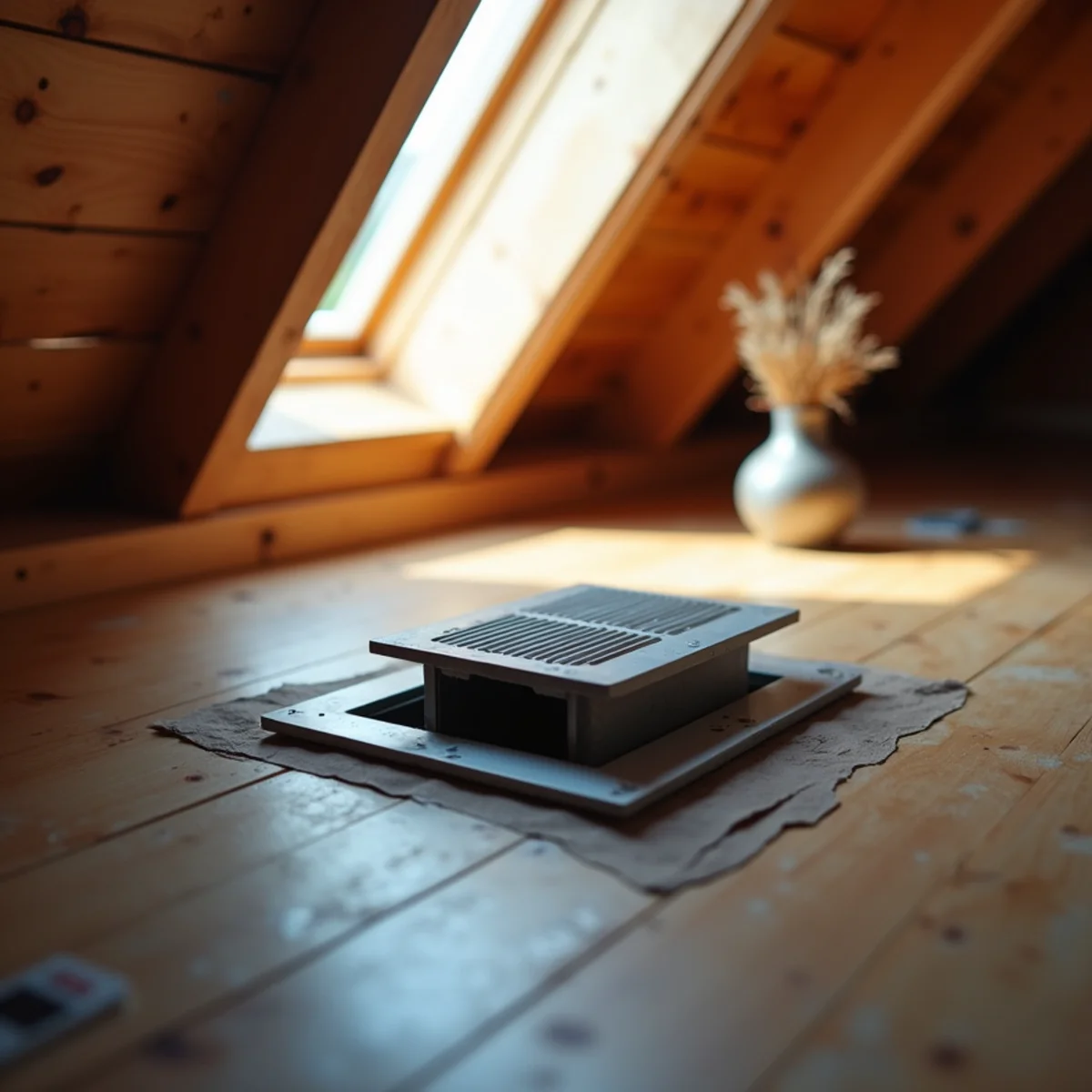
We get up in the attic and out on the roof to see how the air is actually moving. We check whether the intake at the eaves matches the exhaust up top, and we look for heat, moisture, and daylight showing through where none of it should be.
Soffit and intake vent repair
Air has to get in low before it can ever leave high. We clear blocked soffit vents, replace the crushed or painted-over ones, and make sure the insulation is not smothering the airflow right at the eaves.
Ridge and exhaust vent work
We repair or replace ridge vents, box vents, and off-ridge vents so the hot air actually leaves the attic instead of sitting under the deck all afternoon.
Powered and turbine vents
If your home has attic fans or turbine vents, we check that they still run, seal up right, and are not dragging cooled air out of the house. We repair or swap out the ones that have quit.
Sealing and flashing at vent penetrations
Every vent is a hole cut in your roof. We reseal and reflash around them so the ventilation fix does not turn into a leak the next time it rains hard.
Full ventilation system upgrades
On older homes with too few vents or a mismatched setup, we lay out a proper intake and exhaust system sized to your roof and attic instead of patching a design that never worked in the first place.
Signs You Need Roof Ventilation Repair
- Your upstairs rooms stay hot no matter how hard the AC runs
- The attic feels like a furnace or smells musty the moment you open it
- You see frost, condensation, or water stains on the underside of the roof deck
- Cooling bills keep climbing with no obvious reason
- Shingles are curling, cracking, or aging faster than they should
- Mold or mildew is showing up in the attic or on the ceiling right below it
- The roof decking feels warped or spongy when you press on it from inside
How It Works
- 1
Book a free inspection
Call or request an estimate and tell us what you are noticing, whether it is a hot upstairs, a musty attic, or a power bill that keeps creeping up.
- 2
We check the attic and roof
We look at intake and exhaust together, measure the balance, and check for heat, trapped moisture, and any damage to the decking or vents. We take photos so you can see it for yourself.
- 3
You get a written estimate
Clear scope, clear price, and a straight recommendation on what your attic actually needs. No vague verbal numbers that grow later.
- 4
We do the repair
We clear intakes, repair or replace exhaust vents, reseal every penetration, and bring the system into balance for your roof and attic.
- 5
Final walkthrough
We show you what changed, confirm air is moving the way it should, and clean up before we call the job done.
Roof Ventilation Repair Across Brevard County
We handle roof and attic ventilation repair across Titusville and the surrounding Brevard County communities, from Mims and Scottsmoor down through Port St. John, Cocoa, and the beaches.
Roof Ventilation Repair FAQs
How do I know if my attic ventilation is actually the problem?
Will more roof vents fix my hot upstairs?
Should I install a powered attic fan?
How much does roof ventilation repair cost in the Titusville area?
How long does a ventilation repair take?
Do ridge vents leak during Florida storms?
Can I claim storm-damaged vents on my insurance?
Does bad ventilation really shorten the life of my shingles?
You Might Also Need
Roof Repair
Fast fixes for leaks, lifted shingles, and worn spots.
Learn moreRoof Inspection
Free, honest look at your roof with photos.
Learn moreRoof Maintenance
Keep your roof going longer against sun and salt air.
Learn moreSoffit & Fascia Repair
Protect eaves and roof edges from moisture and rot.
Learn moreTrusted by Local Homeowners
Had a brown stain spreading across the ceiling after the last round of summer storms. They came out for a free inspection, tracked it to lifted shingles near the ridge, and had it patched within the week. Straight answer, fair price.
We were sure we needed a full replacement. They pulled up on the roof, showed me photos on their phone, and told me a repair would carry us a few more years. I appreciated not getting pushed into something I did not need yet.
Full tear off and replacement done in a few days. The crew swept the yard for nails every evening and left it cleaner than they found it. The new roof handles the salt air and heat a lot better than the old one.

Ready to Get Started With Roof Ventilation Repair?
Book your free inspection and written estimate today.