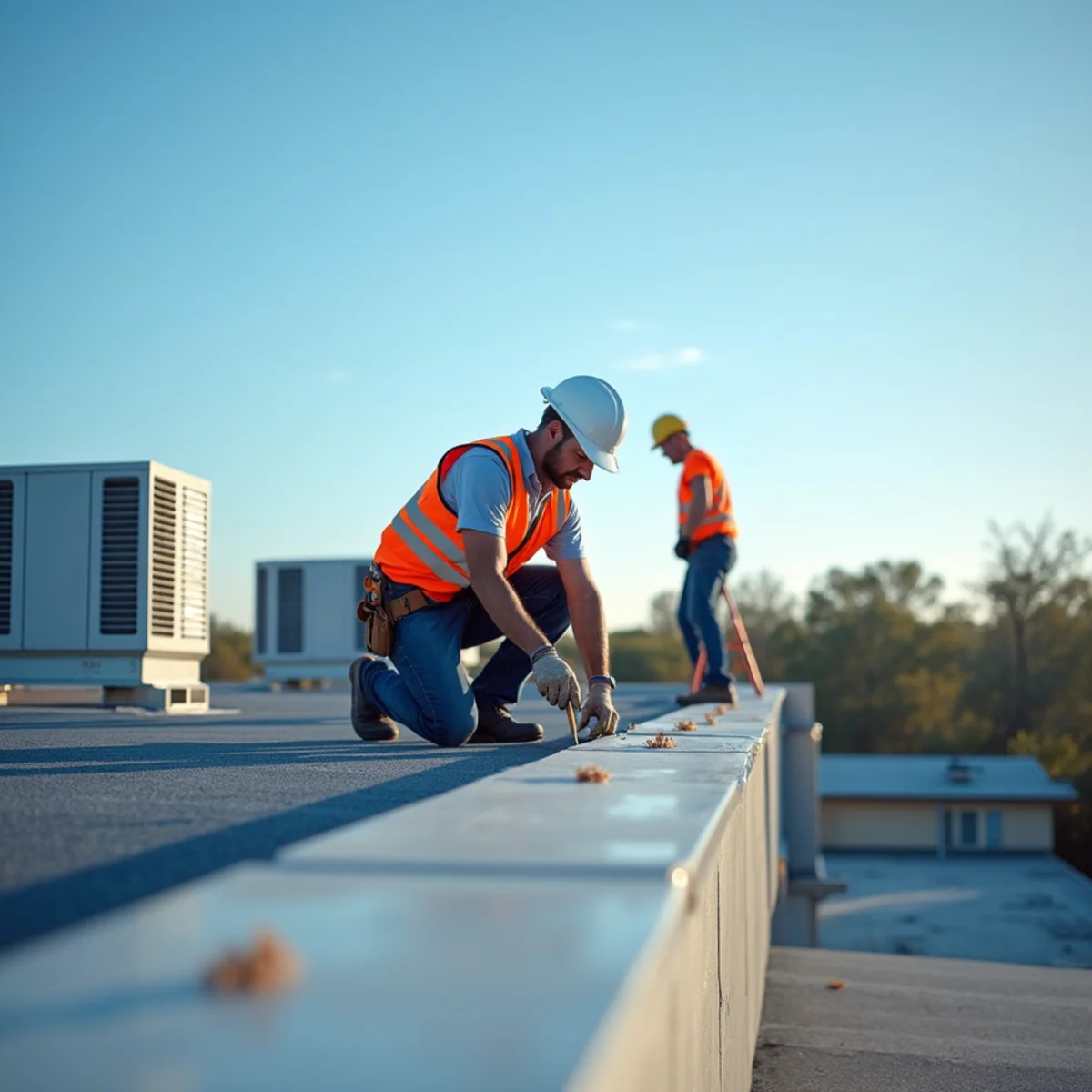
Commercial Roofing in Titusville, FL
A commercial roof does not fail the way a house roof does. Water ponds in a low spot, a seam pulls apart, a drain clogs, and you find out when a tenant calls about a stain over their office or product sitting under a drip. By then the deck underneath may already be soft. Align Roofing Service works on flat and low-slope commercial roofs across Titusville and Brevard County, and we look at the whole system instead of just the wet spot on the ceiling below.
We handle repairs, full replacements, and roof coatings for storefronts, offices, warehouses, restaurants, medical buildings, and multi-unit properties. You get a written scope and price before anything starts, and a straight answer on whether a repair holds or the roof is at the end of its run.
We are based here at 688 S Park Ave in Titusville, so a real person gets on your roof quickly. No crew driving in from Orlando, and no waiting a week to be seen while water is already coming in.
Choosing the Right Commercial Roof System for a Titusville Building
Most flat roofs in Brevard are one of a handful of systems, and the right one depends on your building, your budget, and how long you plan to own it. Here is how they actually behave on the Space Coast, not the brochure version.
Single-ply membrane: TPO and PVC
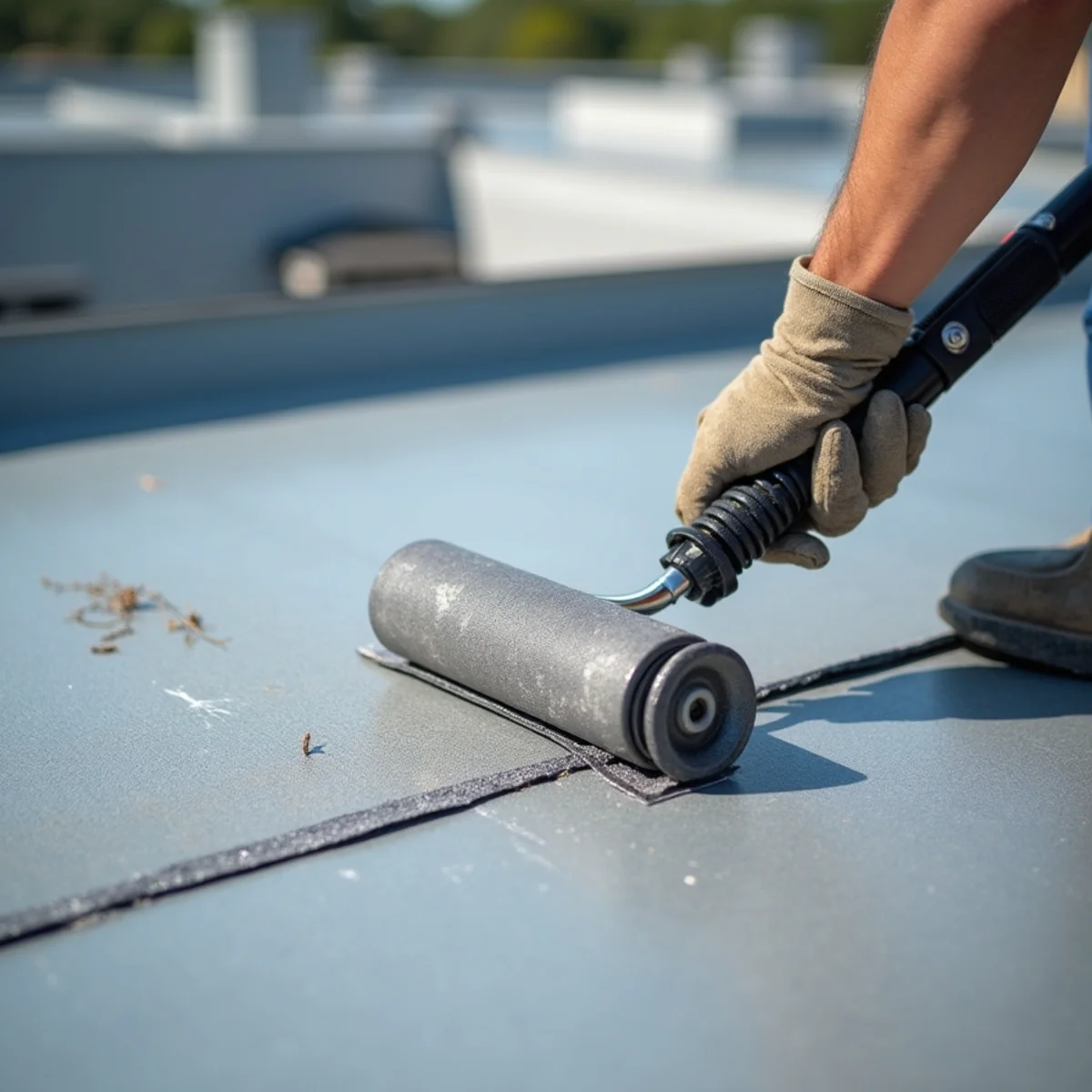
TPO is the most common membrane going on flat commercial roofs today. It is a white single-ply sheet heat-welded at the seams, and the light color bounces a lot of the summer sun off your building instead of letting it cook the inside. That reflectivity is why it caught on here. A white roof runs cooler, and on a warehouse or a retail box that means less for your AC to fight in July and August. The weak point is the seams and the edges. A TPO roof lives or dies on weld quality, so the crew and the detailing matter more than the brand printed on the roll.
PVC is the close cousin. It costs a little more than TPO, but it holds up better against grease, chemicals, and constant ponding. If you run a restaurant, a commercial kitchen, or anything venting oils onto the roof, PVC is usually the smarter pick, because grease eats TPO over time. Both handle Florida UV fine at the right thickness. Thin membrane is where the cheap bids hide, so ask what mil you are getting.
Modified bitumen and built-up roofs
Modified bitumen is an asphalt-based system in rolled sheets, torched or adhered in layers. It is tough, it takes foot traffic well, and it forgives a lot on roofs where people are up there servicing HVAC all the time. Built-up roofing, the old tar-and-gravel approach, is still out there on older Titusville buildings and still does its job, though most owners move to a membrane or a coating when it is time to redo it. Both are heavier and darker than TPO, so they run hotter unless you top them with a reflective coating.
Metal and standing seam
Some low-slope commercial buildings run metal, and standing seam is the version that lasts. Done right with corrosion-resistant fasteners and proper edge detailing, metal roofing outlives a membrane by decades and stands up to wind better than almost anything. The catch on the Space Coast is salt. Salt air off the Indian River Lagoon works on any exposed metal, so the coating and the fastener choice decide how long it holds. Cheap panels near the water corrode from the cut edges in, and once that starts you are chasing rust.
Coatings and restoration
If your existing roof is aging but the deck is still sound, a coating can buy you years without a full tear-off. A silicone or acrylic coating goes over the old system, seals the seams and small cracks, and adds a reflective white surface that drops the roof temperature. It is not a fix for a roof that is already soaked underneath, and it does not last forever. But for the right roof at the right time it is the cheapest way to stretch service life and stop small leaks. We tell you honestly whether your roof is a candidate or whether you are throwing good money at a system that needs replacing.
Repair, Recover, or Replace
This is the decision most owners are really trying to make, so here is the plain version.
Repair makes sense when the roof is generally sound and the problem is local. A split seam, a failed pipe boot, flashing pulling away from a curb. We fix the roof leak at the source and you keep the roof you have. The mistake here is patching the same spot over and over. If a roof needs its third repair in two years, the money is telling you something.
Recover means a coating or a second membrane over the first. It works when the deck and insulation below are dry and the existing system is mostly intact, and it skips the tear-off cost. It only works once, though, and only if what is underneath is dry. Put a new system over wet insulation and you seal the water in.
Replacement is the answer when the insulation is saturated, the deck is soft, or the membrane is broken down across the whole roof. It costs the most up front, but a roof failing everywhere is a money pit until you deal with it. The upside is you get to reset the whole system, fix the drainage, and start the clock over. During any roof inspection we give you photos and a straight read on which of these three you are actually looking at.
What Drives Cost and Timeline
Square footage is the obvious one, but it is not the whole story. The condition of the deck matters most, and you cannot see it until the old roof comes off. If the deck is rotted in spots, that gets replaced, and that is the line item that surprises owners on a bid that looked cheap. A crew that has never opened your roof cannot promise you a firm deck number, so a good estimate leaves room for it and tells you so.
The other cost drivers are the number of rooftop penetrations, how much HVAC and pipe you have to flash around, the drainage design, and access. A roof with fifty curbs and units is a lot more labor than a clean open field of the same size. Timeline comes down to weather as much as anything. Our afternoon storms in summer stop membrane work cold, and you never want to leave a roof open overnight in hurricane season. We phase the work so the building stays dry between crews, and we schedule around your operations so a retail or warehouse tenant is not shut down.
How the Work Gets Done Properly
The parts you cannot see from the parking lot are the ones that fail. Edge metal has to be fastened for the wind zone your building sits in, because wind gets under the corners and edges of a flat roof first and peels from there. Flashing at walls, curbs, and parapets has to be watertight and tied into the membrane, not just caulked. Every penetration needs a proper boot or pitch pan. Drainage has to actually move water off the roof, not toward a low spot. And insulation has to be dry going in, because wet insulation under a brand new membrane is a leak you paid to install.
Ponding is the Brevard killer. A flat roof is never truly flat, and if the slope and drains do not carry water off within a day or two, that standing water adds weight, finds every weak seam, and works into the system. Correcting drainage during a flat roofing job is often the difference between a roof that lasts and one that leaks again in three years.
Storms, Wind, and Insurance
Hurricane season is the part you plan around. After a named storm we document storm damage with photographs and written notes so you have a record for your carrier. We do not file or negotiate your claim, and we do not promise what an adjuster will approve. What we do is give you clear evidence of what the wind and water did, which is what a legitimate claim runs on. If a leak is active and product or tenants are at risk, our emergency roof repair gets a dry-in on it fast so the damage stops spreading while the paperwork catches up.
Align Roofing Service is based right here at 688 S Park Ave in Titusville, and we work commercial roofs across Brevard, from North Brevard down through Cocoa and the rest of the Space Coast. If your roof is aging, leaking, or you just want to know where it stands before hurricane season, call us for a free inspection and a written estimate. You get photos, a plain read on repair versus replacement, and a price before any work starts.
What This Service Covers
Flat and low-slope repair
Split seams, blistered membrane, failed flashing at walls and curbs, and leaks around rooftop HVAC units. We find where water actually gets into the system and stop it before the insulation and deck below get soaked.
Commercial roof replacement
When a roof is past patching, we tear off the old system and put down a new one built for Florida heat and wind. TPO, modified bitumen, and other single-ply and built-up options, depending on your building and how the roof gets used.
Roof coatings and restoration
A silicone or acrylic coating can add years to a sound but aging flat roof, seal small leaks, and cut the heat load off the building. We tell you honestly whether coating makes sense or whether you are just buying time on a roof that needs replacing.
Ponding water and drainage fixes
Standing water sits on a lot of Brevard flat roofs after summer downpours. We correct low spots, clear and reset drains and scuppers, and deal with the slope so water leaves the roof instead of sitting on it.
Rooftop penetration and flashing work
HVAC curbs, vents, pipes, and equipment supports are where most commercial leaks start. We reflash and reseal these penetrations so the openings around them stay watertight.
Storm damage and emergency service
Wind can lift and peel membrane along the edges and corners of a flat roof. After a storm we inspect, tarp or seal active leaks, and document the damage with dated photos to support your insurance claim. Emergency service runs 24/7.
Signs You Need Commercial Roofing
- Water stains spreading across a suite or warehouse ceiling, or drips during rain
- Standing water that sits on the roof for days after a storm
- Membrane that is blistered, cracked, or lifting at the edges and corners
- Seams pulling apart or flashing separating at walls, curbs, and parapets
- Leaks showing up around rooftop HVAC units, vents, or pipes
- Roof drains and scuppers overflowing or backing up during downpours
- A roof that is 15 years or older and already patched in several spots
How It Works
- 1
Call or request an inspection
Tell us what you are dealing with. If water is coming into an occupied space, we move you up the schedule and treat it as an emergency.
- 2
We inspect the full roof
We get on the roof and check drainage, seams, flashing, penetrations, and edges, then look at the areas you cannot see from the ground. Everything gets photographed.
- 3
You get a written estimate
Clear scope, clear price, and a straight recommendation. Repair, coating, or replacement, with the reasoning behind it so you can make the call.
- 4
We do the work
Proper materials for Florida heat and wind, careful staging around your operation, and cleanup at the end of each day so your business keeps running.
- 5
We walk it with you
You see the finished roof and the documentation before we close out the job, so you know exactly what was done and why.
Commercial Roofing Across Brevard County
We handle commercial roofing in Titusville and across Brevard County, from North Brevard down through Cocoa, Rockledge, Merritt Island, and the Space Coast.
Commercial Roofing FAQs
How long does a commercial roof last in Titusville?
TPO or PVC for my building?
Can a roof coating really extend the life of my commercial roof?
Why does my flat roof keep collecting water after it rains?
What happens if the roof deck is rotted underneath?
How do you keep my business running during a reroof?
Do you handle roofs with a lot of rooftop HVAC and equipment?
Should I inspect my commercial roof before hurricane season?
You Might Also Need
Flat Roofing
TPO and modified bitumen for low-slope roofs.
Learn moreRoof Replacement
Full tear-off and new roof built for Florida sun and wind.
Learn moreRoof Repair
Fast fixes for leaks, lifted shingles, and worn spots.
Learn moreStorm Damage Roof Repair
Inspection and repair after wind, rain, and debris.
Learn moreTrusted by Local Homeowners
Had a brown stain spreading across the ceiling after the last round of summer storms. They came out for a free inspection, tracked it to lifted shingles near the ridge, and had it patched within the week. Straight answer, fair price.
We were sure we needed a full replacement. They pulled up on the roof, showed me photos on their phone, and told me a repair would carry us a few more years. I appreciated not getting pushed into something I did not need yet.
Full tear off and replacement done in a few days. The crew swept the yard for nails every evening and left it cleaner than they found it. The new roof handles the salt air and heat a lot better than the old one.
Ready to Get Started With Commercial Roofing?
Book your free inspection and written estimate today.