How to Know When Your Titusville Roof Needs Repair
Key Takeaways
- Salt air, UV, and summer storms make Titusville roofs age faster than the shingle warranty suggests, often showing real wear by 12 to 15 years.
- Watch for missing or curling shingles, granules in the gutters, ceiling stains, daylight in the attic, a sagging roofline, and corroded flashing.
- Ceiling stains, attic daylight, and active leaks are call-now signs. In Florida humidity, a small leak can grow mold in a day or two.
- Repair when damage is in one area and the deck is sound. Replace when wear is widespread, leaks appear in multiple rooms, or the roof is past 15 years.
- After a storm, document the damage with photos and a written inspection before repairs. Align documents storm damage to support your insurance claim but does not file it.
Roofs on the Space Coast age faster than most people expect. Between the salt air off the Indian River, the UV that runs hard from spring through fall, and the summer storms that roll in almost every afternoon, a Titusville roof takes a beating that a roof in Ohio never sees. The tricky part is that most roof problems start small and quiet. By the time you notice a stain on the ceiling, water has usually been moving through the roof for a while.
This guide walks through the real roof repair signs Titusville FL homeowners should watch for, what they mean, and when a spot fix is enough versus when it is time to think bigger. We keep it specific to Brevard County conditions, not the generic checklist you find everywhere else.
Why Titusville Roofs Wear Differently
Three things drive most roof damage here, and they work together.
Salt air is the quiet one. Titusville sits right on the Indian River Lagoon, and salt carries inland on the breeze. It corrodes metal faster than freshwater air does, so nails, fasteners, drip edge, and flashing rust and loosen sooner. A lot of leaks that look like a shingle problem are actually a corroded flashing problem underneath. If you live close to the water, it helps to understand how salt air damages roofs on Space Coast homes.
UV is the constant one. Florida sun bakes asphalt shingles year round. The sun cooks the oils out of the shingle mat, and the shingle gets brittle. That is why granule loss and cracking show up earlier here than the manufacturer's rated lifespan suggests.
Wind and rain are the loud ones. Afternoon thunderstorms during summer bring hard, driving rain and gusts that lift shingle edges. Hurricane season, June through November, adds the big wind events on top. Every storm that lifts a shingle even a little makes the next storm's job easier.
Put those together and you get roofs that need attention on a shorter clock than the box the shingles came in would suggest. Watching for the signs below is how you catch problems while they are still a repair.
The Warning Signs, From the Roof to the Ceiling
Missing, cracked, or curling shingles
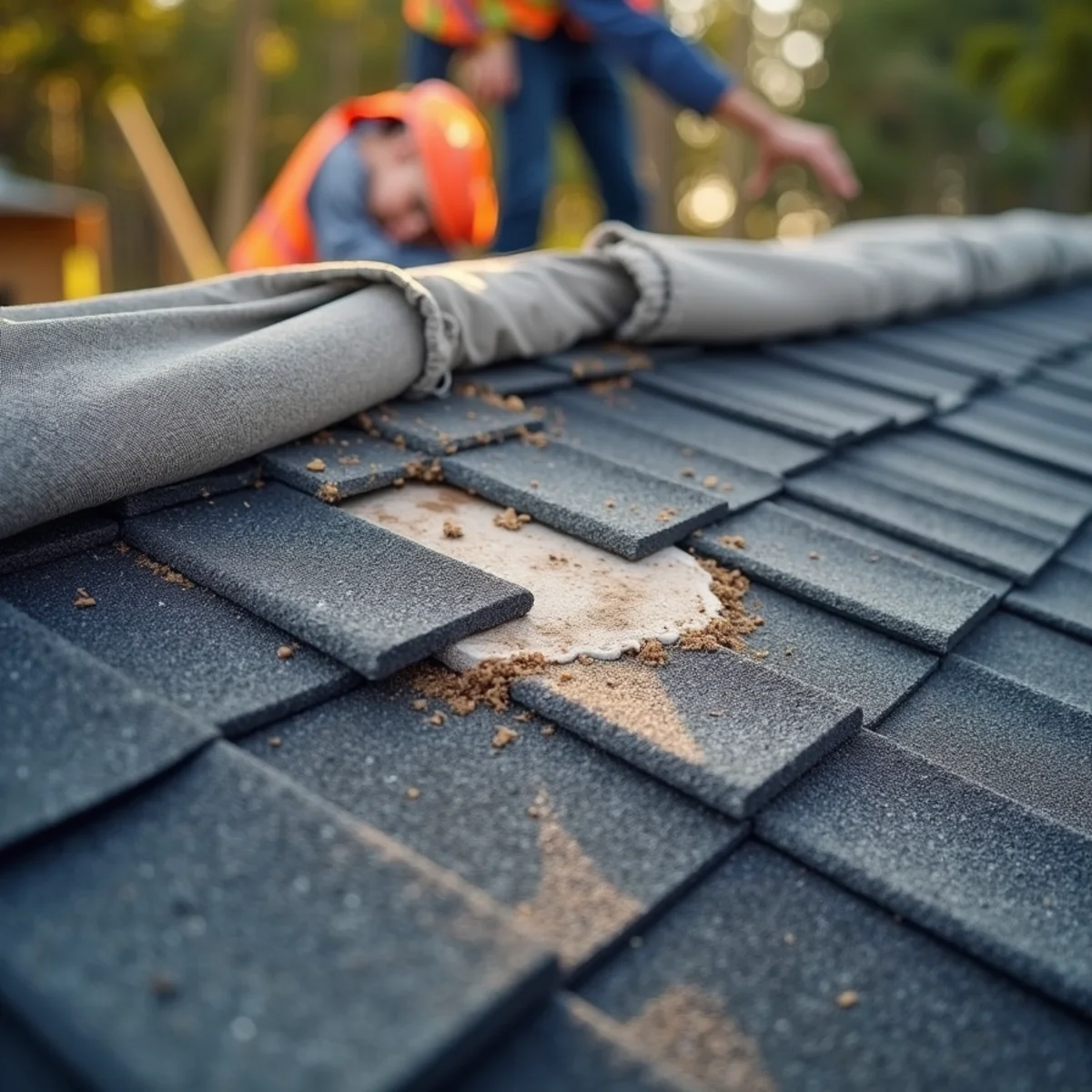
Walk your yard after a storm and look up. Missing shingles leave a darker patch where the underlayment shows. Curled edges and cupped shingles mean the material has dried out and lost its grip. Cracks that run across a shingle are a UV and age signal. Any of these leaves the layer under the shingle exposed to the next rain, and that layer is not built to be your waterproofing on its own. A handful of shingles is usually a roof repair job. Widespread curling across the whole slope points to age.
Granules in the gutters and at the downspout
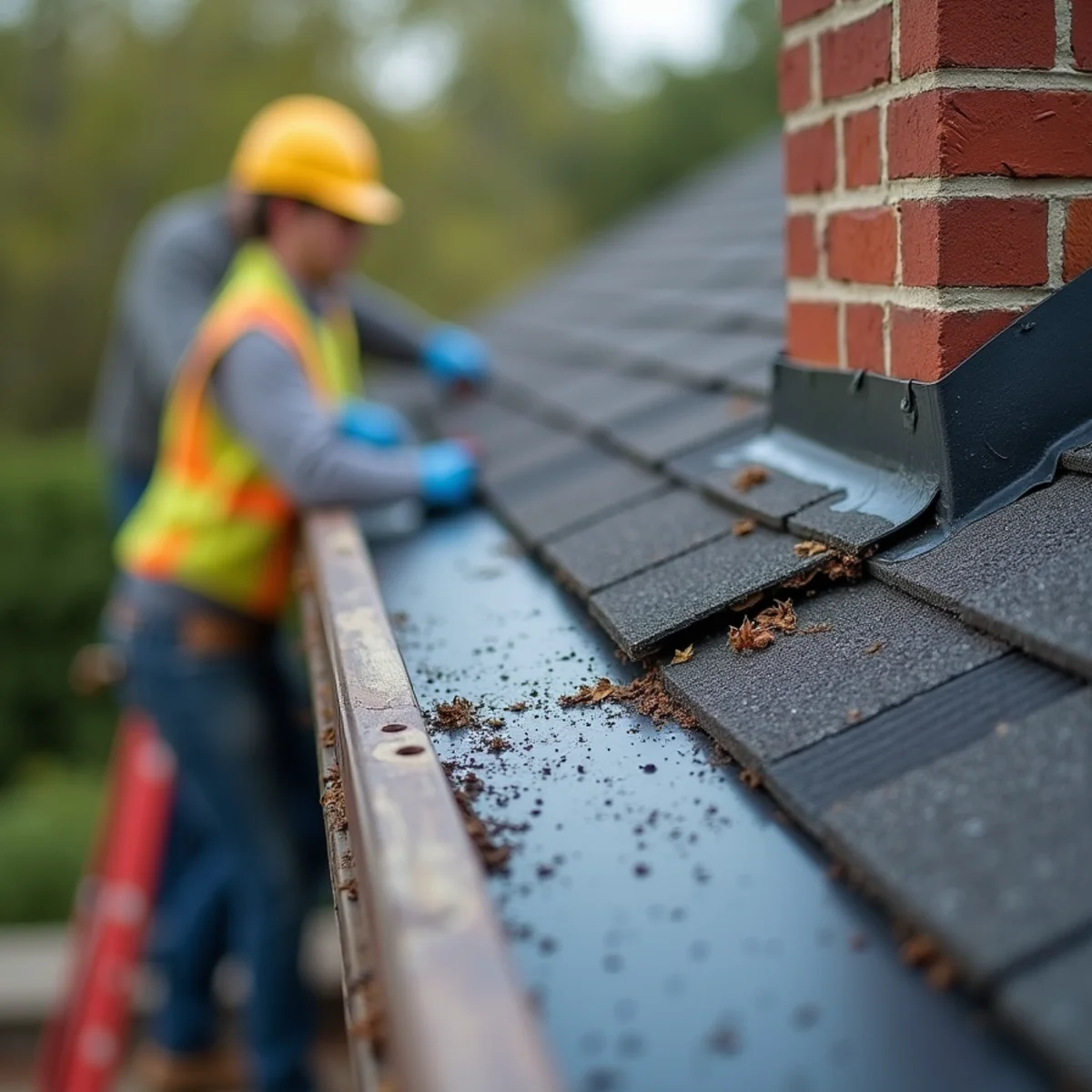
Shingles are coated in tiny mineral granules that shield the asphalt from the sun. When you find piles of what looks like coarse black sand at the bottom of a downspout or in the gutters, the shingles are shedding their sun protection. A little granule loss on a new roof is normal. Steady loss on an older roof means the shingles are wearing through, and bald spots will follow.
Stains on the ceiling or walls
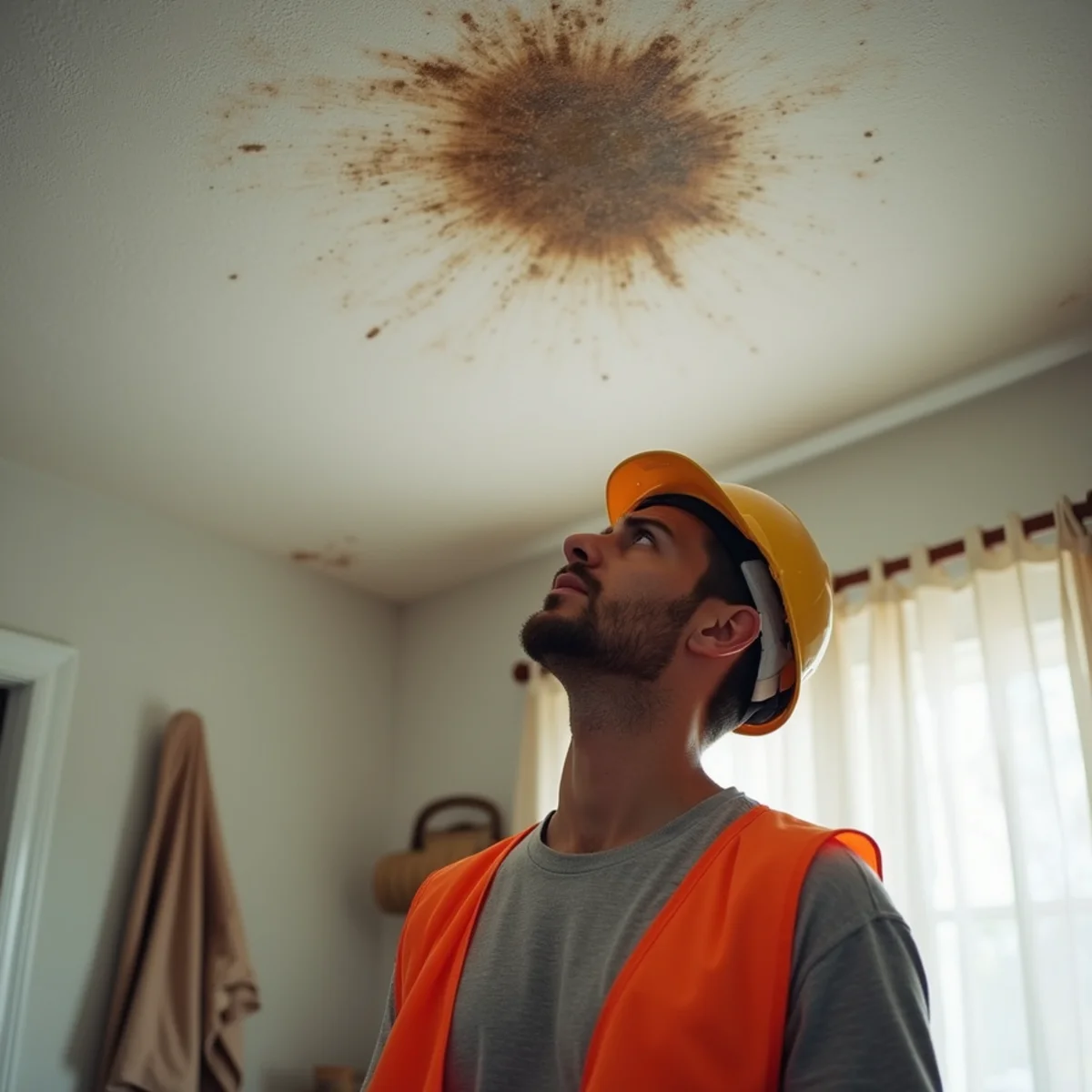
Brown or yellow rings on a ceiling, or a soft blistered spot on drywall, mean water has already gotten past the roof. In our humidity, a wet cavity does not dry out on its own. Mold can take hold in a day or two, so this is not a wait-and-see sign. The stain also sits lower than the actual leak most of the time, because water runs along a rafter before it drips, so the source is rarely straight above the spot you see. This is when to call for roof leak repair before the damage spreads into insulation and framing.
Daylight or damp in the attic
The attic tells the truth. On a sunny day, go up with the lights off and look for pinpoints of daylight coming through the roof deck. Look for dark streaks on the wood, a musty smell, or damp insulation. Rusty nail tips or wet decking near a vent or pipe usually points to failed flashing at that penetration. The attic is also where you catch a ventilation problem, which we cover below.
A sagging or uneven roofline
Stand across the street and sight down the ridge. It should be straight. A dip, a wave, or a section that looks like it is settling means something under the surface is failing, often decking that has been soaked over time or a structural issue. Sagging is one of the few signs that can jump quickly from a repair to a bigger job, so do not sit on it.
Failed or missing flashing
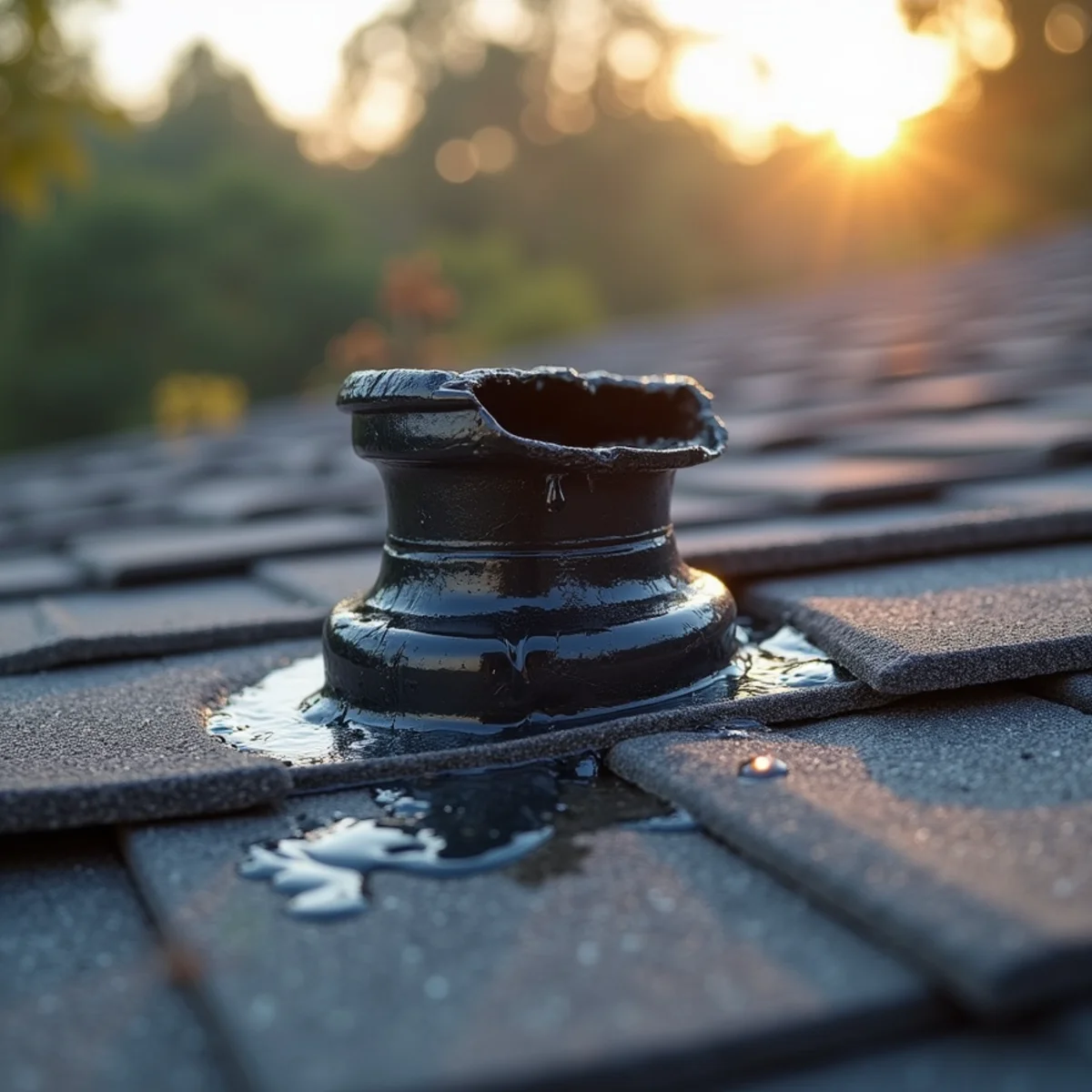
Flashing is the metal that seals the joints where the roof meets a wall, a chimney, a skylight, or a vent pipe. On the Space Coast, salt air corrodes it and storms bend or loosen it. Rusted, cracked, or lifted flashing is one of the most common leak sources we find, and it often gets missed because people focus on the shingles. Rubber pipe boots around plumbing vents are another weak point. They dry out and split in the sun, usually within several years here.
A climbing power bill
If your cooling bill creeps up for no clear reason, a tired roof can be part of it. Poor attic ventilation and heat-soaked, damaged roofing let more heat into the house, and the AC runs harder to keep up. Bad ventilation also cooks the shingles from below and traps moisture in the attic, which shortens the roof's life and can grow mold. If your attic feels like an oven and your bill is up, a roof ventilation check is worth it.
Age and the last big storm
Asphalt shingle roofs in Brevard often show real wear around the 12 to 15 year mark, sooner than the same shingle would age up north. If you do not know your roof's age, that alone is a reason for an inspection. And if a named storm or a hard squall has passed through since your last look, treat that as a prompt to check, even if nothing looks wrong from the ground. Wind damage is often invisible from the driveway.
Signs by Roof Type
Not every Titusville roof is asphalt shingle, and each material fails in its own way.
Tile roofs, common on Brevard's Spanish-style homes, tend to hold up well, but cracked or slipped tiles let water reach the underlayment, and that underlayment is what actually keeps you dry. It ages faster than the tile. Loose or broken tiles after a storm are the sign to watch for with tile roofing.
Metal roofs handle wind and sun well, but salt air is their enemy. Watch for loosened fasteners, rust streaks, and lifted seams. Because metal roofing is often chosen for coastal homes here, catching a corroded fastener early keeps a small fix from becoming a wide one.
Flat and low-slope roofs, which you see on many Titusville commercial buildings and some additions, show their age through ponding water, blisters, cracks, and open seams. Standing water after rain that does not drain within a day or two is a red flag on any flat roof.
Repair or Replace? How to Think About It
Most homeowners want one straight answer: fix it or replace it. Here is the honest framework, and it is worth reading the fuller breakdown of how repair and replacement compare for Titusville homeowners.
Lean toward repair when the damage is in one area, the roof is still within a reasonable share of its life, and the deck underneath is sound. A few storm-damaged shingles, one leaking pipe boot, or a stretch of bad flashing are classic repairs. Catching problems at this stage is exactly why the signs above matter.
Lean toward replacement when the wear is everywhere, not in one spot. Widespread granule loss, curling across whole slopes, multiple leaks in different rooms, or a sagging section usually means the roof is at the end of its run, and patching it becomes throwing money at a problem that keeps moving. Age matters too. Once an asphalt roof is past 15 years in this climate, repairs buy less time.
There is also an insurance angle specific to Florida. Many insurers here have gotten strict about older roofs, and some will not write or renew a policy on a roof past a certain age. If you are already seeing several of these signs on an older roof, a full roof replacement can be the move that also keeps you insurable. A straight roof inspection is the fastest way to get a real answer instead of a guess, and we give you a written estimate either way. It also helps to know how the Florida 25% roof rule and insurance non-renewal can affect an older roof.
After a Storm: Document Before You Fix
When a storm rolls through Brevard, the order of operations matters if you plan to file a claim. Take photos of any visible damage from the ground, note the date of the storm, and get a professional inspection. We document storm damage in writing and with photos so you have solid records to support your insurance claim. To be clear, we do not file or negotiate the claim for you, and we cannot promise how your insurer will rule. What we can do is give you a clear, dated record of what the storm did, which is exactly what a good storm damage roof repair starts with. For a serious active leak or a section peeled open by wind, our emergency roof repair team can tarp and secure the roof so the damage stops growing while you sort out the rest.
When to Call and When You Can Wait
A slow granule loss on a newer roof, one or two lifted shingle edges, or a little debris in the gutters can usually wait for a scheduled visit. An active ceiling stain, daylight in the attic, a sagging line, or water coming in during a rain are all call-now situations. In our humidity, the gap between a minor leak and mold in the framing is measured in days, not weeks.
If you are not sure which bucket you are in, that is the whole point of a free inspection. It costs you nothing to know.
Get a Straight Answer on Your Roof
Align Roofing Service is based right here at 688 S Park Ave in Titusville, and we work across Titusville and greater Brevard County. If you have spotted any of the signs above, or you just want to know where your roof stands before the next storm, book a free inspection and written estimate. We handle residential and commercial roofs, offer financing, and keep 24/7 emergency service for the leaks that will not wait. Call +1 (209) 758-8550 to set it up.
Frequently Asked Questions
How often should I have my roof inspected in Titusville?
How long do asphalt shingle roofs last on the Space Coast?
Is a ceiling stain always a roof leak?
Should I repair my roof or replace it?
Can you help with my insurance claim after storm damage?
My roof is leaking right now. What should I do?
Why do roofs wear out faster in Titusville than up north?
Written by Align Roofing Service
A local roofing contractor in Titusville, FL. We help homeowners across Brevard County with honest repair-or-replace advice, free inspections, and 24/7 emergency service.
Back to all articles