
Flat Roofing in Titusville, FL
A flat roof does not shed water the way the sloped roof over your house does. Nothing runs off on its own, so the whole thing lives or dies on drainage, tight seams, and a membrane that can take the Florida sun without giving up. Let one of those slip and the water just sits there until it finds a way in.
Align Roofing Service works on flat and low-slope roofs for homes and businesses around Titusville. Additions and carports, patio and porch roofs, the low-slope commercial buildings you see all over Brevard. We put on new flat roofs, fix the ones leaking right now, and recoat older ones to squeeze a few more years out of them before a full replacement.
If you have a stain creeping across a ceiling under a flat section, or you can see water pooled up there after a storm, get someone to look at it. Our inspections are free and we put everything in writing before anyone starts work.
Flat Roofing in Titusville, Built for the Space Coast Climate
A flat roof is not actually flat. A good one has a slight slope worked into it so water runs off to the drains and scuppers instead of parking on the deck. That one thing, drainage, is the difference between a flat roof that lasts twenty years and one that leaks in five. Most of the flat roofs we look at around Titusville sit on commercial buildings, additions, porches, carports, and mid-century homes over on the mainland. The rules do not change from one to the next. Whether it is a strip mall on Garden Street or a back porch off Washington Avenue, the water has to leave the roof and the membrane has to survive the sun.
We work both sides of the job. New membrane systems and tear-offs on one end, and targeted roof leak repair on the other when the trouble is one bad seam or a failed drain instead of the whole roof. Here is the stuff people actually look into before they pick up the phone, laid out plain.
Repair or Replace: How to Tell
This is the first thing everybody asks, and the honest answer comes down to age, the shape of the membrane, and how much of the roof is wet underneath.
Repair is the right move when the membrane still has life in it and the damage stays in one spot. A split seam, a puncture, cracked flashing where the roof meets a wall, a clogged drain, all of that is fixable without touching the rest of the roof. If your roof is under ten or twelve years old and the leak traces back to one clear spot, you are usually looking at a repair.
Replacement is where you land when the failure is spread out. Blistering everywhere, seams letting go across the whole field, water that ponds and never dries, a deck that feels soft and spongy underfoot, those all point the same way. Once water works into the insulation and the deck below it, patching the top does nothing for you. You are just sealing wet material in place. A moisture scan or a few test cuts during a roof inspection shows us how far the water has traveled, and that answers the question. If a full tear-off is the call, our roof replacement crew handles the deck repair and the re-slope too.
The trap is paying for repair after repair on a roof that is already finished. Two or three leaks a year on an old membrane is money spent putting off a decision you have already made.
Membrane Options and the Trade-Offs
There is no single best flat roof material. There is the right one for your building, your budget, and how long you plan to keep the place.
TPO is the single-ply we put down most on flat commercial roofs in Brevard. It comes in white, which bounces the sun and keeps the building cooler, and the seams are heat-welded into one continuous sheet instead of glued. That welded seam earns its keep here. Our summers cook a roof, and a bond that does not lean on adhesive holds up better through years of heating and cooling. A reflective color also takes some load off the AC, which counts for something in a Space Coast July.
Modified bitumen is a torch-down or self-adhered asphalt system, usually two or three plies. It is tough under your feet, so it is a good pick for a roof that sees foot traffic, service techs, or rooftop equipment. It handles ponding better than a thin single-ply and it is easy enough to patch down the road.
EPDM, the black rubber membrane, is durable and lasts a long time, but that black surface soaks up heat in Florida and the seams are usually glued rather than welded. We will spec it when it fits the job, though for most Titusville buildings a reflective welded system makes more sense.
For a low-slope porch or carport tied into a shingle or metal house, we sometimes steer the conversation toward metal roofing or a standing-seam transition instead, depending on the pitch. Not every low roof needs a membrane.
Titusville and Brevard Factors That Actually Change the Job
Salt air off the Indian River and the Atlantic eats metal. Drains, scupper edges, any exposed fastener or piece of flashing, all of it needs corrosion-resistant metal, not bare steel that rusts through in a couple of seasons. This is a coastal build, and it should get treated like one.
The UV never lets up. A flat roof takes the sun head-on all day with no slope to shed the heat. That is why membrane color and thickness matter more here than they do up north, and why a cheap thin membrane fails early on the Space Coast.
Then you have the water. Our afternoon storms drop hard, fast rain, and a flat roof with poor slope turns into a shallow pond. Standing water finds every weak seam and speeds up the breakdown. Real slope, clean drains, and tight flashing are the whole game.
Hurricane season is the other side of it. Wind-driven rain gets under loose edges and lifts membrane that was not fastened well. Flat roofs need the perimeter and the corners fastened for our wind zone, because that is where the uplift is worst. If a storm has already caught you, our storm damage roof repair and emergency roof repair crews run 24/7, and we photograph and document the damage in writing to support your insurance claim. We do not file or negotiate the claim for you, but the documentation puts what your adjuster needs in their hands.
What Drives Cost and Timeline
Square footage is the obvious piece, but it is not the whole story. The big swings come from the membrane you pick, whether we recover over the old roof or tear it all off to the deck, how much wet insulation or rotted decking turns up once we open it, and how busy your roof is. Curbs, drains, skylights, HVAC units, and pipe penetrations all need detailing, and every penetration is a spot water can get in, so they take time to do right.
Re-sloping a roof that never drained properly adds to the bill, but it is the fix that actually kills the ponding. Tapered insulation builds the slope back in. Skip it and you get the same puddles on a brand new membrane.
Timeline on a typical single-ply commercial flat roof runs a few days to about a week once we start, weather allowing. Summer storms push the schedule, and we would rather lose a day waiting for a dry deck than trap moisture under a new membrane. On the commercial roofing side we work around your business hours where we can so the parking lot and entrances stay open.
Common Mistakes We Catch
Buried and blocked drains are the number one thing we find. Nobody thinks about a flat roof until it leaks, and by then a clogged drain has been holding water for months. Loose or reused flashing at walls and curbs comes next. Flashing is the seam between the roof and everything poking through it, and it tends to go first. Cheap thin membrane put down to hit a low bid is the third. It looks fine on day one and cracks under the UV a few summers later.
The fix for most of this is nothing fancy. Clean detailing, corrosion-resistant metal, real slope to the drains, and a membrane rated for our sun and wind. Add a yearly look with roof maintenance, keep the drains clear, and a flat roof will go the distance.
We serve Titusville and the Brevard communities around it including Cocoa. If your flat roof is ponding, leaking, or just getting up there in age, call Align Roofing Service at (209) 758-8550 for a free inspection and a free written estimate. We will tell you straight whether you need a repair or a replacement, and financing is available if it is time for a new roof.
What This Service Covers
New flat roof installation
We put in flat and low-slope systems for additions, patios, carports, and commercial buildings. That covers TPO and PVC single-ply membranes, modified bitumen, and built-up roofing. We match the system to the building, the slope, and how the space gets used.
Flat roof repair
Most flat roof leaks come back to open seams, punctures, failed flashing at walls and curbs, or a drain that quit draining. We track down where the water actually gets in instead of chasing the stain, then patch or reseal it the right way.
Coatings and recoating
A silicone or acrylic coating seals the surface, reflects heat, and can buy years on a flat roof that is worn but not failing yet. It costs less than tearing off and rebuilding, and it helps with attic heat and the power bill through the summer.
Drainage and ponding fixes
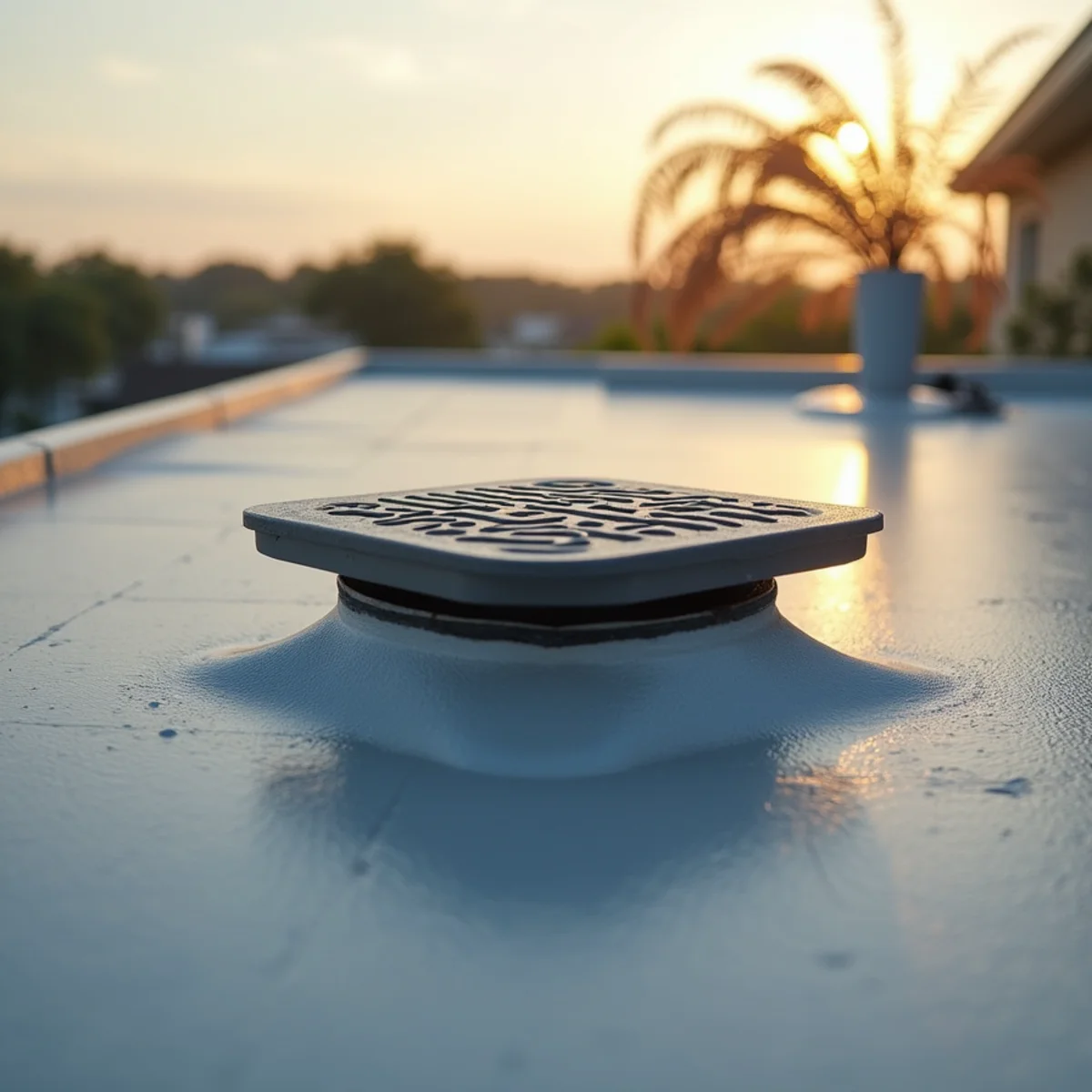
Water that sits for days after a rain is the number one killer of flat roofs. We check the drains, scuppers, and low spots, clear out what is clogged, and correct the slope or add tapered insulation wherever water keeps pooling.
Flashing and detail work
The edges, walls, curbs, and penetrations are where flat roofs leak first. We reflash around HVAC units, vents, skylights, and parapet walls so the water stays on top of the roof and out of the building.
Commercial low-slope roofing
We work on the flat and low-slope roofs you find on Titusville shops, offices, warehouses, and rental units. Repairs, recoats, and full replacements, scheduled to keep your doors open while we work.
Signs You Need Flat Roofing
- Water stains or bubbling paint on a ceiling under a flat or low-slope section
- Standing water still sitting up on the roof a day or two after rain
- Cracks, blisters, or splits you can see in the membrane surface
- Seams lifting, curling, or pulling apart
- Flashing loose or separated where the roof meets a wall or around a vent or HVAC unit
- The surface feels soft or spongy when you walk it
- A drain or scupper that stays clogged and backs up during downpours
How It Works
- 1
Tell us what you are seeing
Call or request an estimate and describe the problem. A ceiling stain, water pooling up top, or a seam that has opened. If water is coming in right now, we move you up the schedule.
- 2
We inspect the flat roof
We get up there and check the membrane, seams, flashing, drains, and low spots. We take photos so you can see what we found instead of taking our word for it.
- 3
You get a written estimate
Clear scope and clear price, with a straight recommendation on whether a repair, a recoat, or a full replacement makes the most sense for your roof and budget.
- 4
We do the work
Proper materials for Florida heat and wind, careful setup around your home or business, and cleanup at the end of each day. For commercial jobs we schedule around your hours.
- 5
We check it holds water
We confirm drainage runs the way it should and walk the finished roof with you before we call the job done.
Flat Roofing Across Brevard County
We install and repair flat and low-slope roofs across Titusville and all of Brevard County, from Mims and Port St. John down through Cocoa, Rockledge, and Merritt Island.
Flat Roofing FAQs
How long does a flat roof last in Florida?
Why does water pond on my flat roof, and is it a problem?
Can you repair a flat roof leak or do I need a whole new roof?
What is the best flat roof material for a Titusville building?
Do flat roofs hold up in hurricanes?
Does salt air affect a flat roof?
How much does a flat roof replacement cost?
Do you document flat roof storm damage for insurance?
You Might Also Need
Commercial Roofing
Flat and low-slope roofing for Brevard businesses.
Learn moreRoof Leak Repair
Find where water really gets in, then stop it.
Learn moreRoof Replacement
Full tear-off and new roof built for Florida sun and wind.
Learn moreFlashing Repair
Seal chimneys, valleys, and skylights against leaks.
Learn moreTrusted by Local Homeowners
Had a brown stain spreading across the ceiling after the last round of summer storms. They came out for a free inspection, tracked it to lifted shingles near the ridge, and had it patched within the week. Straight answer, fair price.
We were sure we needed a full replacement. They pulled up on the roof, showed me photos on their phone, and told me a repair would carry us a few more years. I appreciated not getting pushed into something I did not need yet.
Full tear off and replacement done in a few days. The crew swept the yard for nails every evening and left it cleaner than they found it. The new roof handles the salt air and heat a lot better than the old one.
Ready to Get Started With Flat Roofing?
Book your free inspection and written estimate today.