How to Spot Flashing Damage Around Chimneys and Skylights (Roof Flashing Repair Titusville FL)
Key Takeaways
- Flashing, not missing shingles, is the top source of roof leaks on Titusville homes.
- Salt air, UV, summer storms, and hurricane wind all make flashing fail faster on the Space Coast.
- Check inside first: ceiling stains near the chimney or skylight, musty smells, and damp attic wood.
- Do not caulk over flashing yourself. It traps water and rots the deck. Flashing must lap correctly to shed water.
- Catch it early and the repair is quick and cheap. Let it run and you pay for rotted decking and drywall too.
Most roof leaks in Titusville do not start where people expect. They start at the flashing. If you have been looking into roof flashing repair Titusville FL because a brown ring showed up on the ceiling, the odds are good that the thin metal around your chimney, skylight, or a wall joint is the reason. Flashing is the sheet metal that seals every spot on your roof where shingles alone cannot do the job. When it fails, water gets a straight path into the house, and it usually happens quietly for months before you see a single drop.
This is a walkthrough of how flashing fails on Space Coast homes, the exact signs to look for inside and out, and what to do once you find them. No fluff. Just what a local roofer actually checks.
What flashing is and why it fails faster here
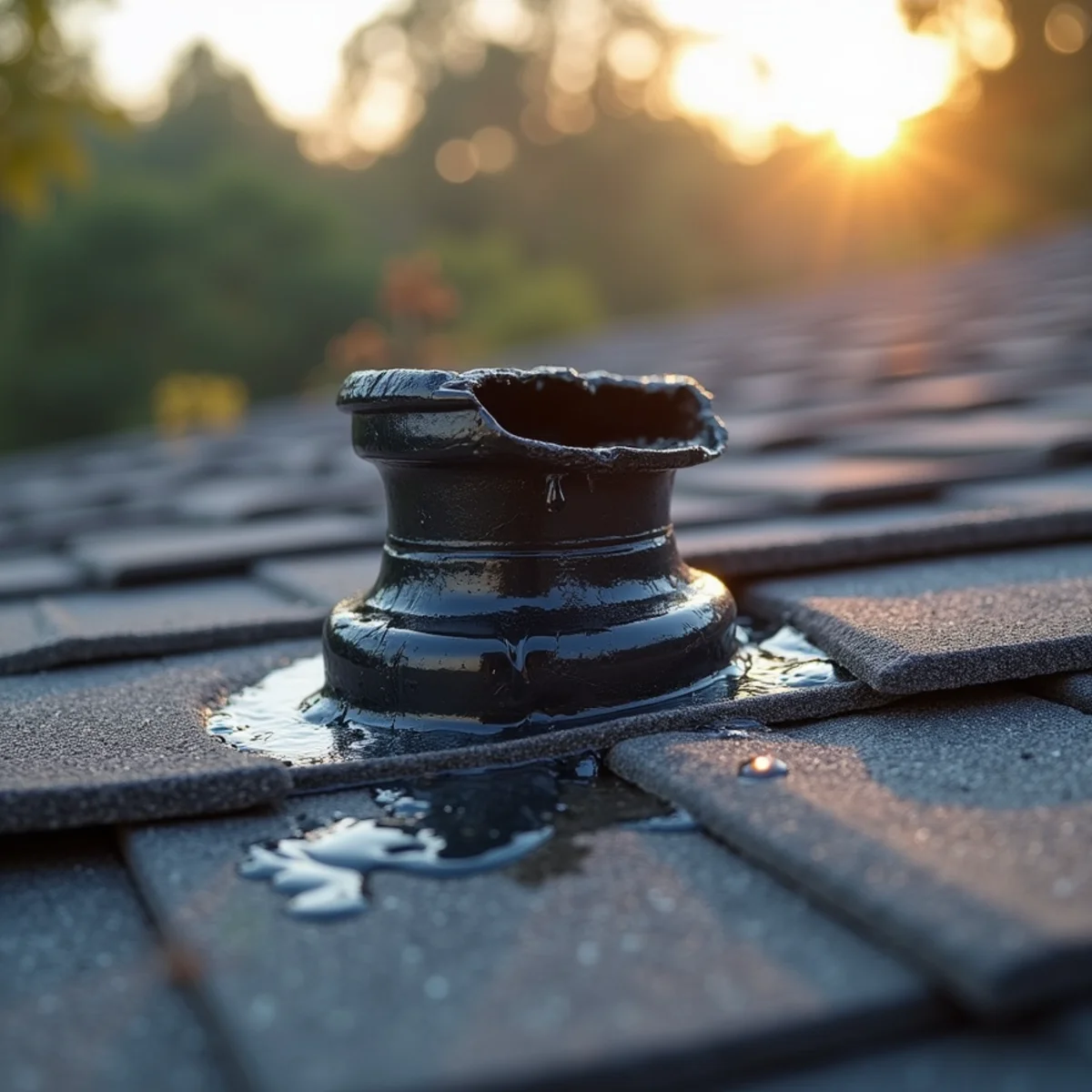
Flashing is metal, usually aluminum, galvanized steel, or copper, bent to bridge two surfaces that meet at an angle. Anywhere the roof plane is interrupted, there is flashing. Around chimneys. Around skylights. Where a lower roof meets a wall. Along valleys where two slopes join. Around plumbing vents and the corners of dormers.
The metal itself is not the weak point most of the time. The sealant and the fasteners are. And in Brevard County, both take a beating. Salt air off the Indian River and the Atlantic corrodes exposed metal and eats through cheap galvanized flashing years before it should fail. Our UV load is brutal, so the caulk and roofing cement that seal flashing edges dry out, shrink, and crack. Then summer afternoon storms drive rain sideways under the lifted edge, and hurricane season finishes the job with wind that flexes and pries the metal loose. A flashing detail that might last two decades in a mild climate often needs attention much sooner on a Titusville roof.
That is why flashing is the number one source of leaks we trace on older homes here. Not missing shingles. Flashing.
Interior signs your flashing is leaking
Most people find flashing problems from the inside first, because the outside damage is hard to see from the ground. Walk your house and look for these.
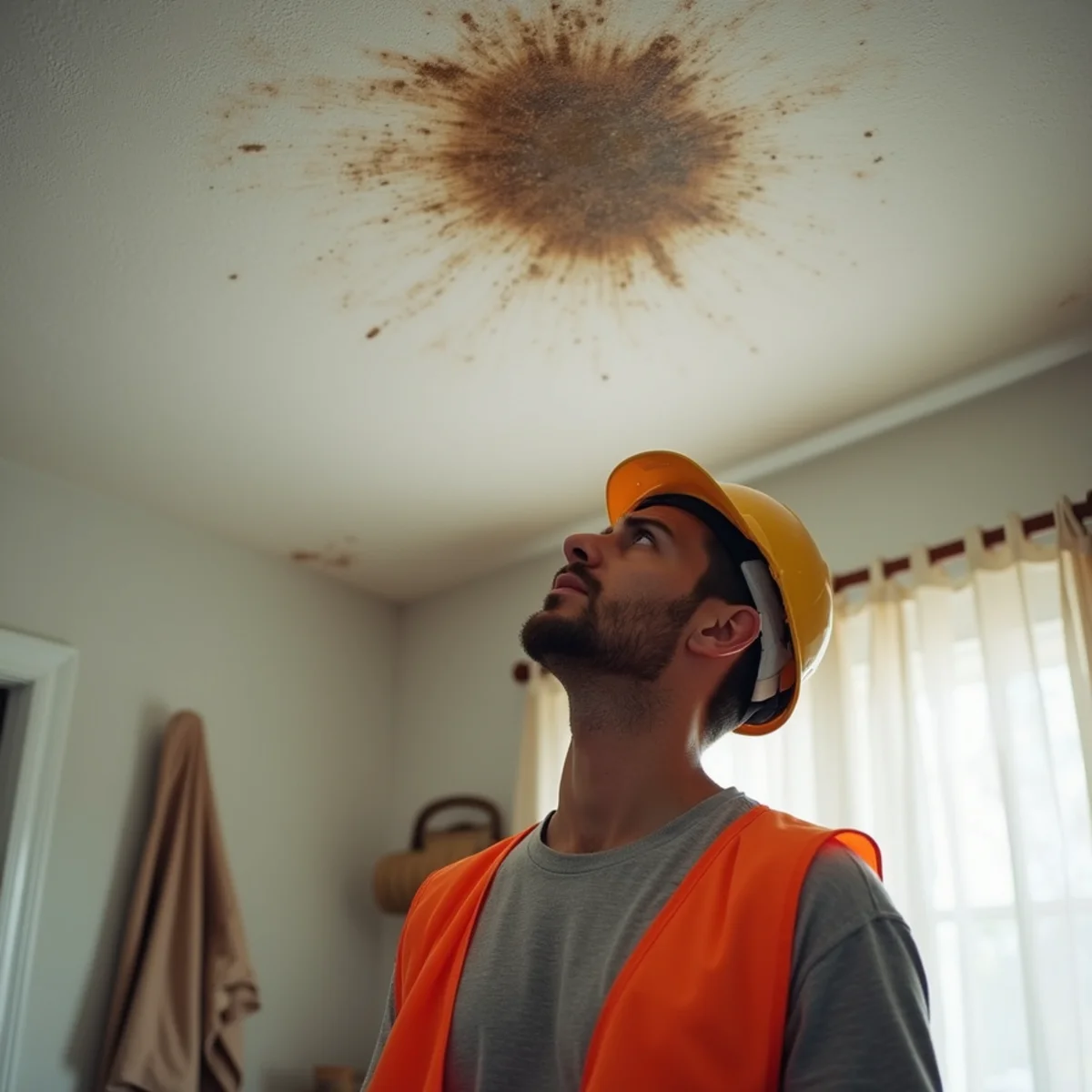
- Brown or yellow water stains on the ceiling, especially near the fireplace, a skylight, or where an upper wall meets the ceiling. A stain that grows or darkens after rain is telling you the leak is active.
- Peeling paint, bubbling drywall, or a soft spot in the ceiling. Soft means water has been sitting there a while.
- A musty or damp smell in a room that will not go away, even when everything looks dry. That is often moisture trapped inside the wall or ceiling cavity.
- Dark streaks or mold on the wall directly below a skylight. Skylights leak down the sides, so the water shows up lower than you might expect.
- Dampness, dripping, or a moldy smell inside the firebox of a masonry fireplace. If the inside of your chimney is wet, the flashing or the chimney crown above it is letting water in.
The attic is the best place to confirm it. Go up during daylight and look at the underside of the roof deck around the chimney and skylight shafts. Damp or stained wood, wet insulation, or nails that look shiny and rusted all point to a leak overhead. If you can get up there safely during a rain, you may even see where the water tracks in. If you are not comfortable in the attic, that is a normal part of any roof inspection we do.
Exterior signs to look for
If you can see your roof safely from a ladder at the edge, or from an upstairs window, here is what flags a flashing problem. Do not climb onto the roof itself. Wet or aging shingles are slick, and a fall is not worth it.
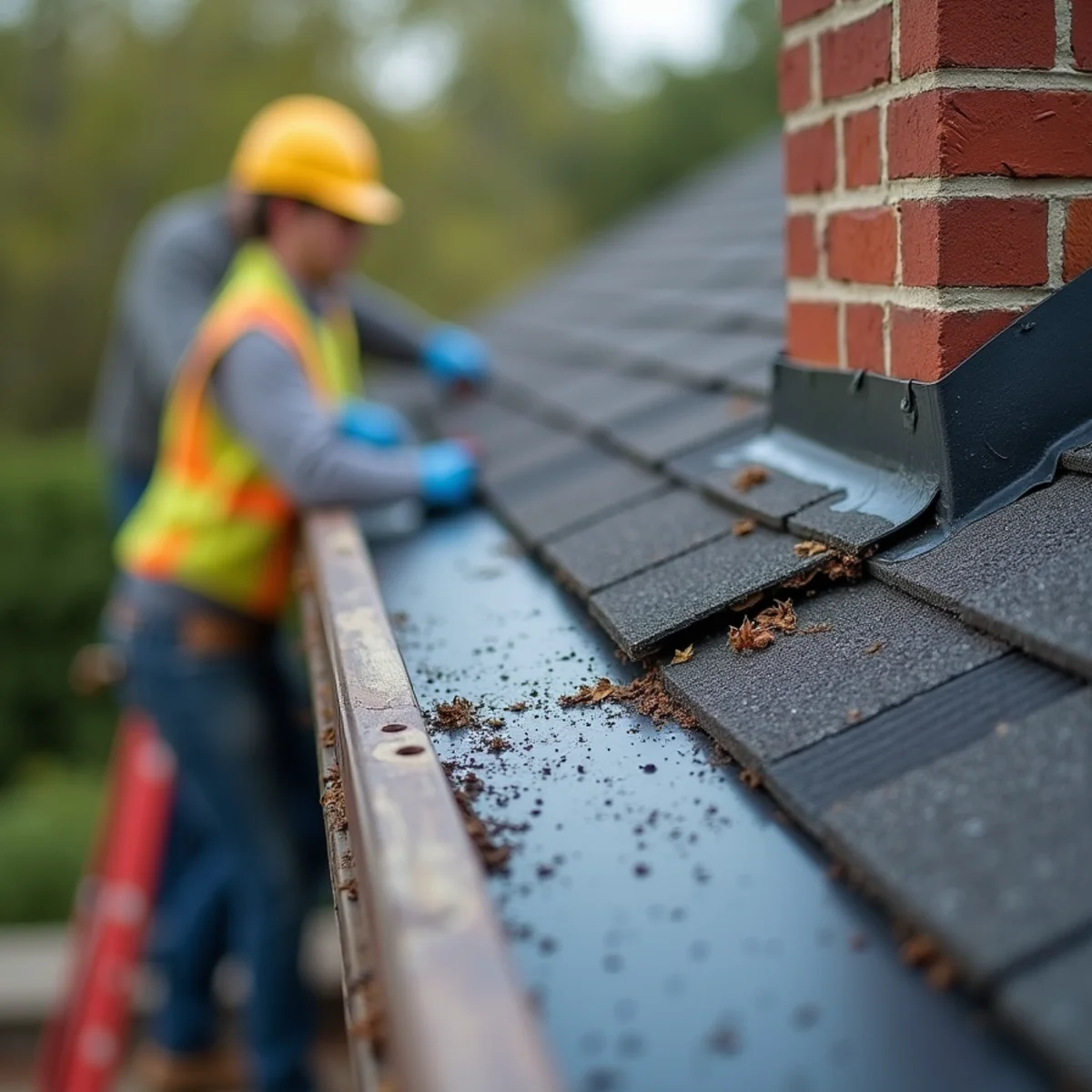
Around a chimney, look at the base where the metal meets the brick and the shingles. You want to see clean, tight metal with a solid seal along the top edge. Warning signs are lifted or peeling metal, a gap between the flashing and the chimney, cracked or crumbling caulk, and rust streaks running down the brick. A white chalky residue on the brick or dark staining under the flashing line usually means water has been getting behind it for a while.
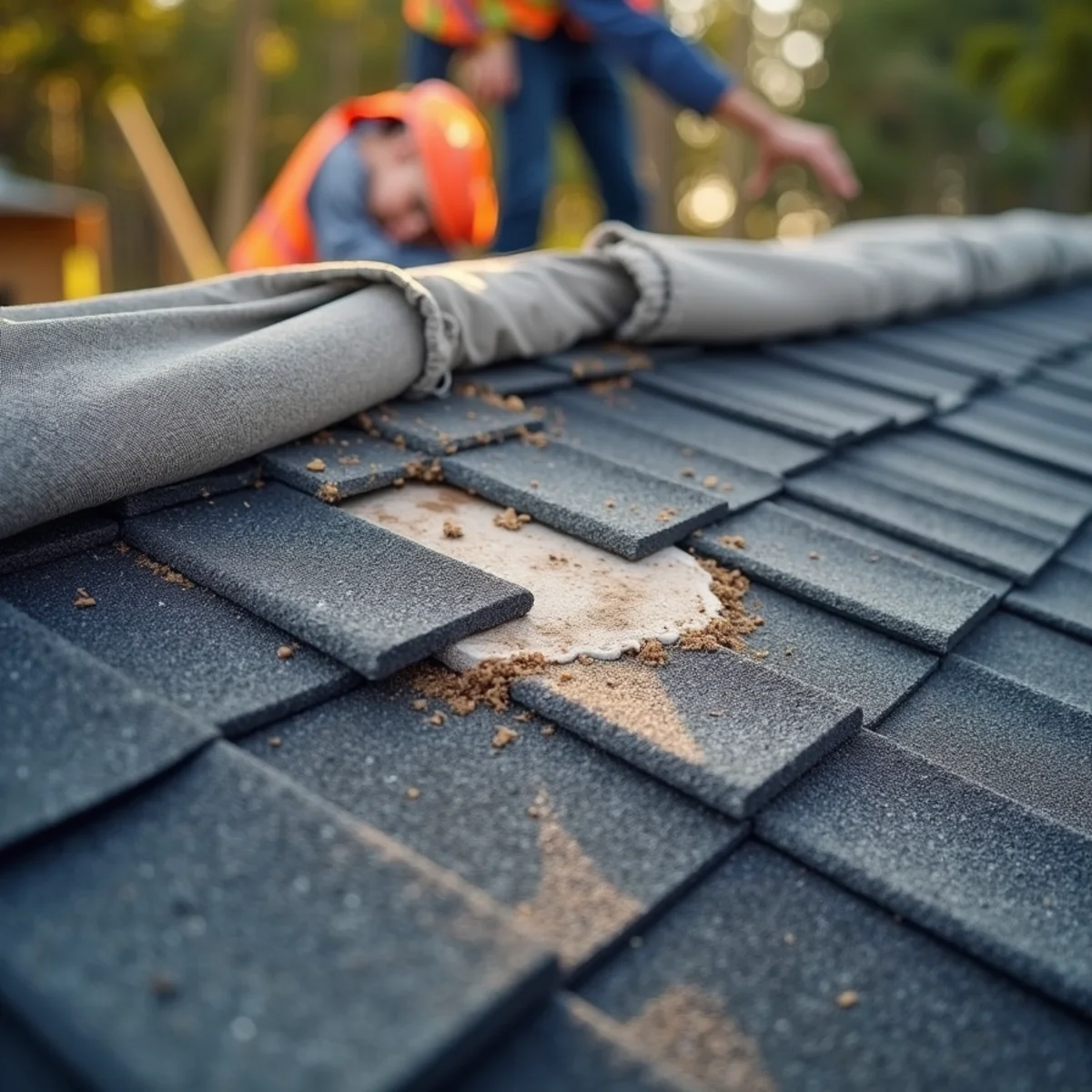
Around a skylight, check the same joint where the frame meets the roof. Cracked sealant, curled or lifting flashing, and shingles nearby that look buckled or discolored all signal trouble. Skylight leaks often come from the flashing kit failing, not the glass.
Everywhere else, watch for corroded or rust-holed metal in valleys and along wall lines, shingles that have lifted or gone missing next to a flashing joint, and granules from the shingles collecting in the gutter, which means the surface around that area is breaking down. If you spot rusted-through flashing, that metal is done and needs replacing, not resealing.
The caulk trap: why a tube of sealant makes it worse
Here is the mistake we see constantly. A homeowner spots a gap, runs a bead of hardware-store caulk or roofing tar over the whole flashing, and calls it fixed. It works for a season. Then the sun bakes that patch, it cracks, and now water gets trapped underneath where you cannot see it, rotting the deck faster than before.
Flashing is designed to shed water through overlapping layers, not to be glued shut. Counter flashing tucks into the mortar joint of a chimney and laps over the step flashing woven into the shingles below it. That layered system is what keeps water out. Smearing sealant across the top defeats it. Real flashing repair means either resetting the metal correctly or cutting it out and installing new flashing that laps the right way. A quick caulk job is a delay, not a repair, and it often costs more in deck damage than doing it right the first time.
Is it the flashing or the whole roof?
This matters because it changes what the fix looks like and what it costs. A leak that shows up only around the chimney or skylight, on a roof that is otherwise in decent shape, is almost always a flashing problem and a targeted roof leak repair. But if you are also seeing widespread granule loss, curling shingles across the whole roof, or multiple leak points, the flashing may just be the first thing to give out on a roof that is near the end of its life. In that case, patching one flashing detail buys you a little time, and a full roof replacement is the honest long-term answer. A good roofer will tell you which situation you are in instead of selling you the bigger job by default.
After a storm
Titusville takes direct hits from summer thunderstorms and the occasional tropical system, and flashing is one of the first things wind pries loose. If you have had a hard blow, add flashing to your post-storm check. Lifted metal around the chimney, a skylight that suddenly leaks after years of being fine, or fresh rust streaks after high wind are all signs the storm moved something. We handle storm damage roof repair across Brevard County, and we document what we find with photos and written notes so you have what you need to support an insurance claim. We do not file or negotiate the claim for you, but solid documentation makes your own claim stronger.
When to call a pro
Catch flashing damage early and the repair is usually quick and affordable. Let it run and you are paying to replace rotted decking, ruined insulation, and stained drywall on top of the flashing itself. If you have an active stain, a musty room, or visible lifted or rusted metal, do not wait for the next storm to make it worse.
We do free inspections and written estimates across Titusville and the Space Coast, we offer financing, and we run 24/7 emergency service for the leaks that cannot wait for morning. If your ceiling is talking to you, let us take a look before it turns into a bigger roof repair. Call Align Roofing Service at (209) 758-8550 to book a free inspection.
Frequently Asked Questions
What is roof flashing and where is it on my house?
How do I know if my leak is from flashing or from the roof itself?
Can I just caulk the flashing myself?
Why does flashing fail faster in Titusville?
Does insurance cover flashing damage after a storm?
How much does flashing repair cost?
Written by Align Roofing Service
A local roofing contractor in Titusville, FL. We help homeowners across Brevard County with honest repair-or-replace advice, free inspections, and 24/7 emergency service.
Back to all articles