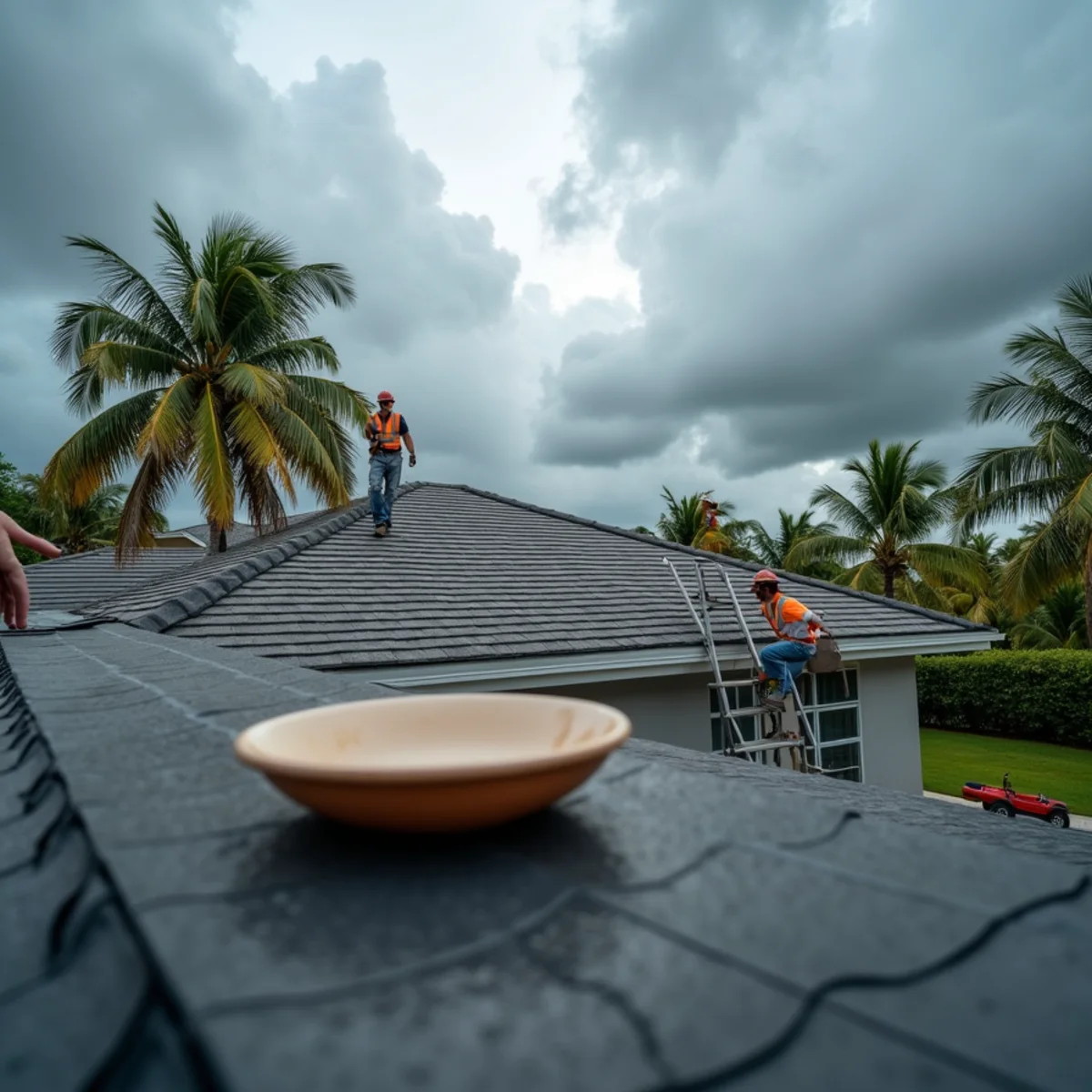
Post-Storm Roof Checklist for Titusville Homeowners: Your Storm Damage Checklist

Key Takeaways
- Start every post-storm check from the ground and never climb a wet or wind-damaged roof yourself.
- Photograph all damage before cleanup, with the date noted, so you have proof if you file a claim.
- Check inside too. Attic and ceiling stains often reveal leaks the outside of the roof hides.
- Piles of shingle granules in your gutters after a storm signal real damage, not normal wear.
- Get a written inspection quickly, and call for emergency service if there is an active leak.
Storm Damage Checklist for Titusville Homeowners
The wind quits, the rain moves off toward the ocean, and you step outside to see what the storm did. This is the moment that decides how the next few weeks go. On the Space Coast, a summer squall or a named storm can lift shingles, drive water under flashing, and leave damage you cannot see from the driveway. This storm damage checklist for Titusville homeowners walks you through exactly what to look at, in what order, and when to call a pro instead of climbing a ladder.
Align Roofing Service is based right here at 688 S Park Ave in Titusville. We inspect roofs across Brevard after every storm season, and we wrote this the way we would explain it to a neighbor standing in their yard.
Key takeaways
- Do a ground-level check first. Never climb a wet or wind-damaged roof yourself.
- Photograph everything before you touch it, and write down the date and time.
- Look inside too. Attic and ceiling stains often show damage the outside hides.
- Small piles of shingle granules in your gutters after a storm are a warning sign, not normal wear.
- Document damage promptly, then get a written inspection so you have proof if you file an insurance claim.
Start on the ground, not on the roof
Before anything else, look for hazards. Downed power lines, sagging tree limbs, and loose panels can still fall. Give any drooping line a wide berth and call the utility. Water pooling near the meter or panel is a reason to stay out until it is checked.
Then walk a slow lap around the house. Keep both feet on the ground and look up. You are checking the roof edges, the fascia, the soffit vents, and the walls for anything obviously out of place. A pair of binoculars helps more than you would think. If you own a phone with a decent zoom, use it to take photos of the roofline from several angles.
We say this on every call: do not get on the roof after a storm. Shingles that look fine can be loose underfoot, tile is slick when wet, and the deck below may be soft where water got in. A fall from a single-story Florida home still lands you in the ER. Let someone with the right footing and gear go up. Our roof inspection crews do this for a living and carry the equipment to do it safely.
What to look for from the yard
Work your way around the whole house and check each of these.
Shingles. Look for missing tabs, shingles that are lifted or creased, and dark patches where the surface layer tore away. High wind breaks the seal between shingles even when nothing blows off, and a broken seal lets the next rain get under. Cracked, curled, or blistered shingles are early trouble. If you find loose shingles in the yard, keep them. They help a roofer match age and product later. It helps to understand how Florida storms damage shingle roofs so you know what these signs mean.
Flashing. Flashing is the metal that seals around chimneys, vents, skylights, and where the roof meets a wall. It is a common leak point after storms. From the ground, look for metal that is bent, lifted, or missing. Gaps here are a fast track to a ceiling stain. If you spot problems, flashing repair is usually a targeted fix rather than a full replacement.
Gutters and downspouts. Fresh dents in aluminum gutters tell you hail or debris hit hard, which means your shingles took the same beating. Check that gutters are still attached and draining. Clogged or torn gutters back water up under the edge of the roof. If they are packed with debris, gutter cleaning clears the way before the next downpour.
Granules in the gutters. After a storm, scoop a hand into the gutter or check the splash where the downspout empties. A little coarse, sand-like grit is normal on an older roof. Large piles of it are not. That is the protective surface of your shingles washing away, which shortens the life of the whole roof and leaves the asphalt exposed to our brutal UV.
Soffit and fascia. These are the boards under the roof edge. Wind pressure and water push at them hard. Look for sagging, staining, or panels that pulled loose. Damage here lets wind and pests into the attic. We handle soffit and fascia repair as part of storm work all the time.
Vents and skylights. Turbine vents, ridge vents, and plumbing boots take a lot of wind. A cracked vent boot or a shifted skylight is a leak waiting for the next afternoon storm. Skylights that are cloudy inside or dripping need attention through skylight installation and repair.
Go inside and check the attic and ceilings
A roof can look clean from the yard and still be leaking. Grab a flashlight and go into the attic if you can get there safely.
Look at the underside of the roof deck for wet wood, dark stains, or daylight coming through where it should not. Check the insulation. Wet or matted insulation means water is getting in, even if the ceiling below still looks dry. Feel for damp spots along the rafters near vents and chimneys, since those are the usual entry points.
Then walk every room and look up. Water stains, bubbling paint, or a sagging spot in the ceiling all point to a breach above. Pay attention to corners and the edges where the ceiling meets the wall, since that is where a slow leak shows first. Around light fixtures and ceiling fans, any brown ring is a red flag. If you find an active drip, a roof leak repair is time-sensitive. The longer water sits, the more it costs to fix.
Document everything before you clean up
This is the step people skip, and it is the one that matters most if you end up filing a claim. Take photos before you move debris or start any cleanup.
- Shoot wide photos that show the whole roof and each wall.
- Shoot close-ups of every dent, missing shingle, and stain.
- Get the date and time in the shot, or note it separately. Timing matters because insurers want to tie damage to a specific storm.
- Photograph the interior stains too, and the attic.
- Keep any pieces of the roof that blew off.
Align Roofing Service documents storm damage in a clear written report with photos so you have solid evidence in hand. We do not file or negotiate your claim, and we cannot promise an outcome, but good documentation is what gives you a fair shot. If you want help organizing it, our insurance claim assistance puts the paperwork together the right way. For the full process, see our step-by-step guide to filing a roof insurance claim in Brevard County.
Stop the damage from getting worse
If there is an active leak or an opening in the roof, you need to slow the water down now, not next week. Move furniture and electronics out from under a drip and put a bucket down. Poke a small hole in a bulging ceiling to let trapped water drain in one spot instead of collapsing a whole section.
Do not try to tarp a roof yourself in the days after a storm. It puts you on the exact slick, weakened surface you should be avoiding. A proper tarp is anchored so it does not turn into a sail in the next gust, and doing it wrong can add damage. This is what emergency roof repair is for. We run 24/7 emergency service across Titusville and the rest of Brevard, so you are not stuck waiting out a leak overnight.
Why storms hit Space Coast roofs so hard
Roofs here live a rough life even between storms. Salt air off the Indian River Lagoon and the Atlantic corrodes fasteners, flashing, and any exposed metal, so a roof near the water is often a little more fragile going into a storm than one further inland. If you live close to the water, see how salt air damages roofs on the Space Coast. Add relentless UV that bakes shingles all summer, and the daily afternoon thunderstorms that roll across Brevard from June into September. By the time a big wind event arrives, a lot of roofs are already worn thin at the seams.
That is why the small stuff on this list matters. A lifted shingle or a cracked vent boot that would be minor up north can turn into an attic full of water fast in this climate. Wind here does not have to reach hurricane strength to do real damage to a roof that was already tired.
When to call a roofer instead of waiting
Call for a professional look if you see any of these: missing shingles, an active leak, water stains inside, dented gutters, granule piles, or a roof that is more than a few years old and just took a serious blow. A trained eye catches things a homeowner cannot, like bruised shingles that have not failed yet and flashing that pulled just enough to leak in the next storm.
Depending on what we find, the fix might be a focused roof repair, full storm damage roof repair, or hurricane roof damage repair after a named storm. If the roof is at the end of its life, a roof replacement may cost less over time than patching it again every season. We work on shingle, tile, metal, and flat roofs, residential and commercial, all across Titusville and greater Brevard County.
Book a free inspection
Do not wait for the next afternoon storm to find the leak for you. Align Roofing Service offers free inspections and written estimates, financing is available, and we are here in Titusville when you need us. Call us at (209) 758-8550 to set up your free storm inspection and get a clear written report on where your roof stands.
Frequently Asked Questions
How soon after a storm should I inspect my roof?
Should I get on my roof to check for damage?
What counts as storm damage worth reporting?
Does Align Roofing Service handle insurance claims?
Why do Titusville roofs seem to take more storm damage?
What should I do if my roof is leaking right now?
Written by Align Roofing Service
A local roofing contractor in Titusville, FL. We help homeowners across Brevard County with honest repair-or-replace advice, free inspections, and 24/7 emergency service.
Back to all articles