How Florida Storms Damage Shingle Roofs and When You Need Storm Damage Roof Repair in Titusville FL
Key Takeaways
- Wind is the top threat in Brevard County. It breaks the shingle seal, and the loose shingles near a missing one are the ones that leak later.
- Check your gutters after a storm. Granules that look like coarse black sand mean your shingles took real damage, even if the roof looks fine from the yard.
- Florida policies often carry a percentage-based hurricane or wind deductible. Know that number before you file, because a small repair can cost less than the deductible.
- The Florida Building Code 25 percent rule can force a full roof section replacement when storm damage passes a quarter of that section.
- Do not walk a wet or storm-hit roof. Photograph damage from the ground and get a free professional inspection to document it for insurance.
Florida weather is hard on a roof, and shingles take the worst of it. Wind, driving rain, hail, and hours of UV all pull at the same layer of asphalt and granules year after year. If you own a home here and you are looking into storm damage roof repair in Titusville FL, it helps to know exactly what a storm does up there and what to check once the sky clears. Most of the damage is not something you can see from the yard. A roof can look fine after a summer squall and still be leaking three weeks later.
This is a plain-language walk through how Florida storms break shingle roofs, what to look for, how the insurance side actually works on the Space Coast, and when a repair makes sense versus a full replacement.
Wind Lifts and Peels Shingles
Wind is the biggest threat in Brevard County. Even a routine afternoon storm can gust hard enough to break the seal that holds shingles down, and you do not need a named hurricane for it to happen.
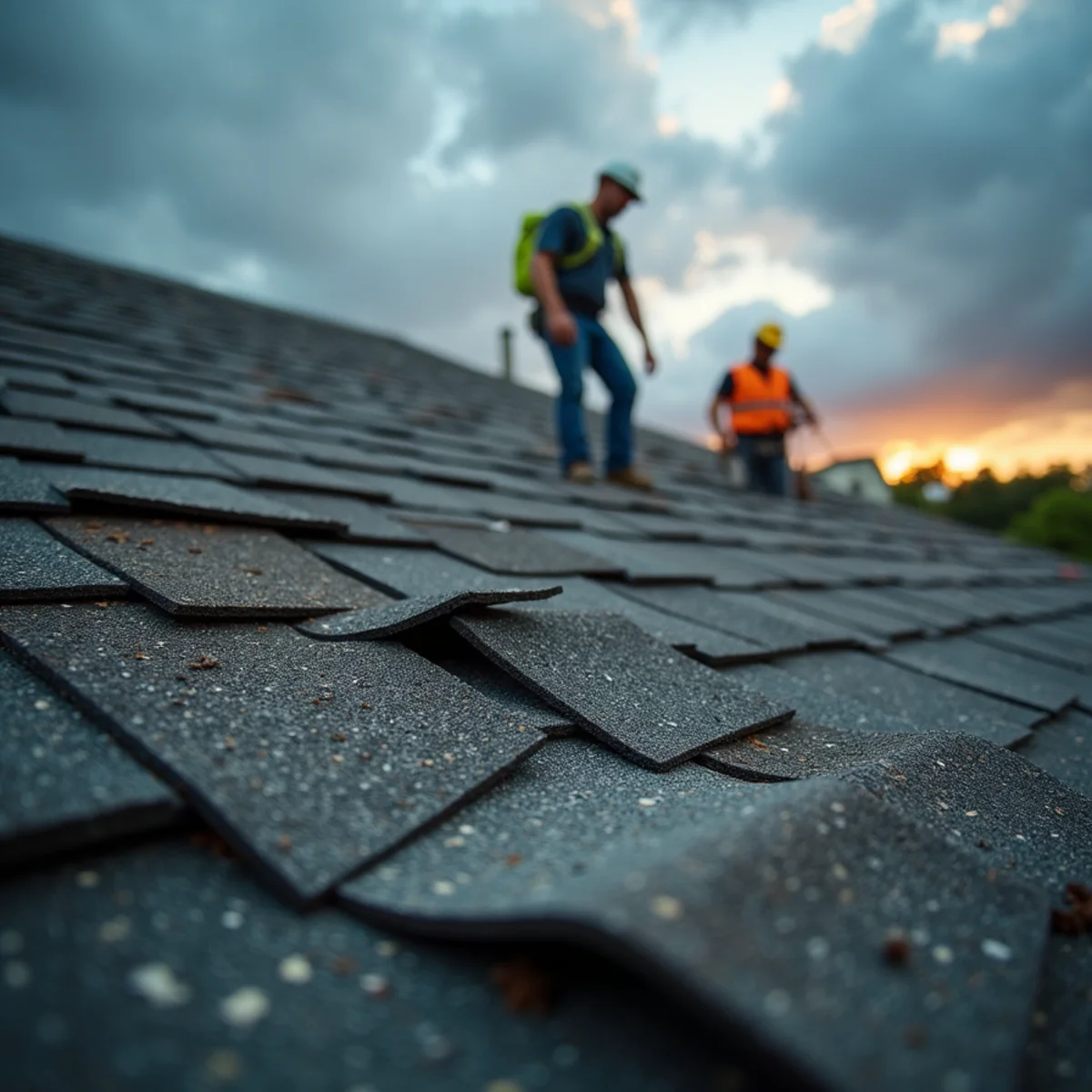
Here is how it works. Each shingle has an adhesive strip that bonds it to the row below. Strong wind gets under the edge, flexes the shingle up, and cracks that seal. The shingle may lay back down and look normal, but it is no longer stuck. The next storm lifts it again, and eventually it curls, tears, or blows off completely.
You often see a few missing shingles after a big blow. What you do not see are the dozens nearby that got unsealed and are now loose. Those are the ones that leak later. This happens most along the roof edges, the ridge, and the corners of the house, where wind pressure is highest. If you notice shingles that look lifted, crooked, or darker than the ones around them, the seal is probably broken. Prompt roof repair on those spots keeps water out and stops the damage from spreading across the rest of the roof.
Rain Finds Every Weak Point
Florida rain does not fall straight down in a storm. Wind pushes it sideways, and it works its way under anything that is not sealed tight.
Once shingles are lifted or missing, rain runs onto the underlayment and the wood deck below. From there it travels along rafters and shows up somewhere you would never guess, like a wall or a light fixture on the other side of the house. That is why a leak in your living room can start from damage over the garage.
The other weak points are the metal flashing pieces around chimneys, valleys, vent pipes, and skylights. Wind and age loosen that flashing, and skylight leaks are one of the more common calls we get after a storm. Tired flashing is worth a look every year, and flashing repair is usually a cheap fix compared to the water damage it prevents. If you see a brown ring on the ceiling or smell something musty in a closet, water is already getting in and you want a roof leak repair crew on it fast.
Hail and Flying Debris
We do not get hail as often as the Midwest, but Brevard County storms can drop it, and it bruises shingles. A hail hit knocks the protective granules off the surface and leaves a soft dark spot. Lose enough granules and the asphalt underneath bakes in the sun and fails years early.
Debris does the same kind of harm. Palm fronds, oak branches, and loose objects get thrown around in high wind and can crack or puncture shingles on impact. After any strong storm, check the gutters. If you find a pile of granules that looks like coarse black sand, your shingles took a beating even if the roof looks fine from the ground.
Heat and Salt Air Make It Worse
Storms do the fast damage. Our climate weakens shingles the rest of the year. Constant UV and attic heat dry them out and make them brittle, and a brittle roof does not flex with the wind, it cracks. Salt air off the Indian River Lagoon adds corrosion to nails, flashing, and fasteners, so coastal Titusville roofs age a little harder than inland ones.
That is why an older shingle roof that has cooked through ten or twelve Florida summers takes storm damage far more easily than a newer one. Good attic airflow slows that aging, so it is worth keeping up on roof ventilation and clearing the gutters before hurricane season. Clogged gutters overflow and back water up under the shingle edges, which rots the wood deck from underneath.
How Insurance Works on Storm Damage in Florida
This is where a lot of homeowners get tripped up. A few things worth knowing before you file.
Florida policies usually carry a separate hurricane or wind deductible, often a percentage of your home value rather than a flat number. On a named storm, that deductible can run into the thousands, so a small repair may cost less out of pocket than your deductible would. It pays to know that number before you file anything.
There is also the 25 percent rule in the Florida Building Code. If a storm damages more than a quarter of a roof section, that section generally has to be brought up to current code, which for many shingle roofs means a full replacement rather than a patch. That single rule decides a lot of claims one way or the other.
Timing matters too. Insurers expect you to act promptly, so document everything right away and get a professional up there before you make permanent repairs. Align Roofing Service photographs and documents storm damage to support your insurance claim. To be clear, we do not file, negotiate, or guarantee the outcome of a claim, but solid documentation from a roofer gives you a much stronger starting point. If you want help organizing that paperwork, our insurance claim assistance walks you through it.
Repair or Replace After a Storm
Not every hit means a new roof. A handful of blown-off shingles, a lifted ridge cap, or damaged flashing is usually a straightforward repair. Age is the deciding factor. A five-year-old roof with wind damage in one area is a clear repair. A roof already near the end of its life, with widespread granule loss and multiple leaks, is often better replaced than patched again and again.
If replacement is the call, it is a good moment to think about upgrades. A wind mitigation inspection can document features that lower your premium, and some homeowners on the Space Coast move to metal roofing for its wind resistance. We walk through all of it during a roof replacement so you are not guessing.
What To Do After a Storm
Do not climb up there yourself. Wet shingles are slick and storm-damaged decking can give way under your weight.
From the ground, look for missing or crooked shingles, granules in the gutters, dented vents, bent flashing, and any staining on interior ceilings or walls. Take photos of anything that looks off, and note the date of the storm. Then have a professional get on the roof for a close look. A free roof inspection tells you whether you need a few repairs or a bigger fix, and it gives you the documentation you need if you do file a claim.
Most storm damage is repairable if you catch it early. Waiting is what turns a small problem into a water-stained ceiling, soaked insulation, and mold in the attic. If water is coming in right now, our emergency roof repair crew can tarp and stop the leak the same day.
Align Roofing Service handles storm damage roof repair for homes and businesses across Titusville and Brevard County, with 24/7 emergency service, financing options, and honest answers. If your roof took a hit this season, book a free roof inspection and we will give you a straight assessment and a written estimate at no cost. Call +1 (209) 758-8550 to set it up.
Frequently Asked Questions
How soon after a storm should I get my roof inspected?
Will my insurance cover storm damage to my shingle roof?
What is the Florida 25 percent roof rule?
Can you just repair a few shingles, or do I need a whole new roof?
My roof looks fine after the storm. Could it still be damaged?
Do you offer emergency service if water is coming in now?
Written by Align Roofing Service
A local roofing contractor in Titusville, FL. We help homeowners across Brevard County with honest repair-or-replace advice, free inspections, and 24/7 emergency service.
Back to all articles