Emergency Roof Repair in Titusville, FL: What Counts as an Emergency?
Key Takeaways
- A roofing emergency is any problem actively letting water in, making the structure unsafe, or getting much worse overnight, such as streaming leaks, a tree through the roof, large areas of missing shingles, or water near wiring.
- One or two missing shingles or a small non-growing stain can usually wait for a scheduled repair, but should still be inspected.
- In the first hour: move valuables, drain a bulging ceiling in a controlled spot, cut power to wet areas, photograph everything, and stay off the roof.
- Brevard's hurricane season, salt air corrosion, and heavy UV age roofs fast and expose weak points during storms.
- Save tarping receipts and keep damaged materials for your insurance adjuster; Align documents storm damage to support your claim but does not file it for you.
Emergency Roof Repair in Titusville, FL: What Actually Counts as an Emergency
Water is dripping through your ceiling at 9 p.m., a summer storm is still rolling over Titusville, and you are staring at a spreading brown stain wondering if you need someone out tonight or if it can wait until Monday. That is the real question behind emergency roof repair in Titusville, FL. Not every roof problem is an emergency, and treating a minor issue like a crisis wastes money. Treating a real emergency like a minor issue can cost you a ceiling, drywall, insulation, and thousands in avoidable damage.
Here is how to tell the difference, what to do in the first hour, and how a roof gets stabilized fast on the Space Coast.
What counts as a roofing emergency
An emergency is any roof problem that is actively letting water in, has made part of the structure unsafe, or will get dramatically worse if it sits overnight. If you are unsure, that uncertainty alone is a good reason to call and describe what you see.
These are true emergencies:
- Active water pouring or streaming inside during or right after a storm. A slow occasional drip is different from water running down a wall.
- A tree limb or debris that punched through the roof. After a Brevard storm, a fallen branch can open the deck to the sky.
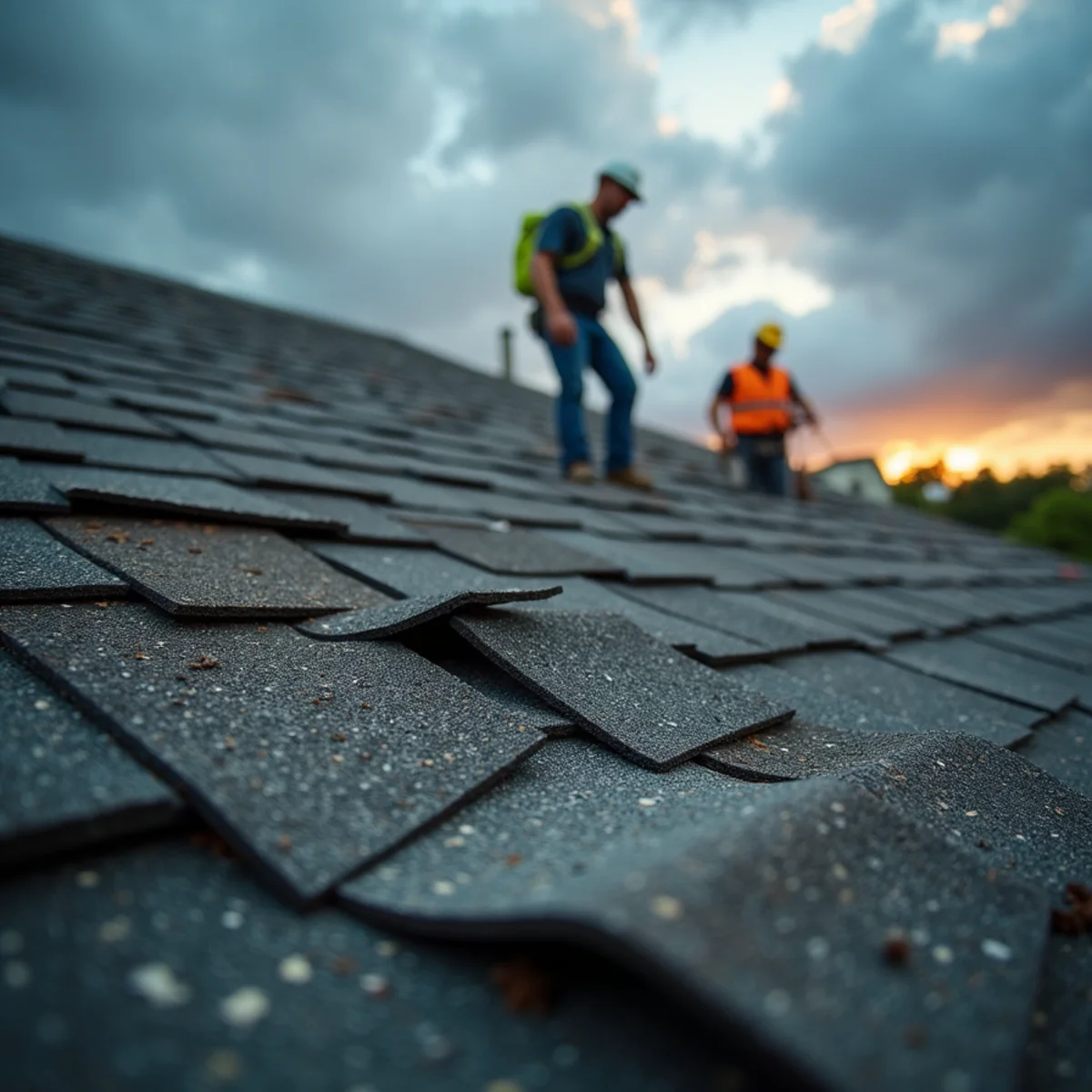
- A large section of shingles or tiles gone. Roughly 10 square feet or more of exposed underlayment or bare wood means the roof can no longer shed water the way it should.
- A visible sag or any part of the deck you can see from inside. That points to soaked, weakened structure.
- Water near light fixtures, ceiling fans, or an electrical panel. Water and wiring together is a fire and shock hazard. Kill the breaker to that area and call.
- Flat or low-slope roof ponding after heavy rain that is finding its way inside. Commercial buildings and flat-roofed additions around Titusville are especially prone to this.
For any of these, our emergency roof repair crew is available 24/7 to stabilize the roof and stop the water.
What can usually wait until business hours
Just as important is knowing when you do not need to pay for an after-hours visit. These can typically wait a day or two for a scheduled appointment:
- One or two missing shingles on an otherwise sound roof. Your underlayment is built to handle short-term exposure.
- A small stain on the ceiling that is not growing and is not dripping.
- Loose or lifted flashing with no active leak.
- A clogged gutter or minor granule loss in the driveway.
- Cracked caulk around a vent boot that is dry inside.
None of that is harmless long term, and it should still get looked at. A missing shingle in July can become a leak by the next storm. But it is a roof repair call, not a middle-of-the-night one. When you are not sure which bucket your problem falls in, send a couple of photos and a short description. That is usually enough for a straight answer.
Why roof emergencies hit harder here
Titusville and the rest of Brevard County get a specific combination of weather that wears roofs down and then finds the weak spot at the worst moment.
Hurricane season runs June through November, and the peak stretch from August into October is when most severe wind events land. A roof that was fine in May can lose shingles or shift tiles in a single named storm. Even without a hurricane, our near-daily summer afternoon thunderstorms drop heavy rain fast, and a small existing gap turns into an active leak in minutes.
Salt air off the Indian River and the Atlantic corrodes metal faster than inland Florida. Fasteners, flashing, drip edge, and any exposed metal on your roof age quicker within a few miles of the coast. Corroded flashing is one of the most common leak points we find on Space Coast homes.
Relentless UV bakes asphalt shingles year round. Sun exposure dries out the asphalt, curls edges, and knocks loose the protective granules. A roof that would last decades up north ages faster down here, so a storm that hits an already sun-worn roof does more damage.
Put those together and you get roofs that are quietly aging, then a storm exposes the weak point all at once. That is why so much of our storm damage roof repair work in Titusville comes in bursts right after a system moves through.
What to do in the first hour
While help is on the way, a few calm steps protect your home and your wallet.
Protect the inside first. Move furniture, electronics, and anything valuable out from under the leak. Put down buckets or a trash can, and lay towels around them. If the ceiling is bulging with trapped water, poke a small hole at the low point with a screwdriver to let it drain in a controlled spot instead of collapsing an entire section of drywall. It feels wrong to poke your ceiling, but a controlled drain saves the room.
Cut power to wet areas. If water is anywhere near fixtures, outlets, or the panel, switch off that circuit at the breaker before you touch anything.
Document everything. Take clear photos and video of the damage inside and out before you clean up or move things back. Timestamped images of the leak, the stains, and any interior damage matter later.
Stay off the roof. A wet Titusville roof, especially tile or metal, is dangerously slick. Storm damage also hides broken decking that will not hold your weight. Trying to tarp a roof yourself in a storm sends people to the ER every hurricane season. Look from the ground, and let a crew with proper gear handle the height.
How the roof gets stabilized
The first visit for a true emergency is about stopping the damage, not finishing the repair. A crew will find the source of the water, which is often several feet away from where it is dripping inside because water travels along the deck before it drops. They tarp the exposed area with heavy-duty material anchored so it holds through the next round of wind and rain, seal off obvious openings, and clear debris that is trapping water.
That temporary work buys time to do the permanent fix right. Once the weather clears and the roof dries, we come back to assess the full extent and handle the roof leak repair, replace damaged decking or shingles, and address the flashing repair that so often turns out to be the real culprit. If the storm took a large area, that conversation may move toward a partial or full roof replacement instead of patching.
Insurance and storm documentation
If your emergency came from a storm, good documentation makes the claim smoother. Most Florida homeowner policies cover sudden storm and wind damage, though they do not cover damage from an old roof that simply wore out. That distinction is why photos and a clear record of the event matter.
Align Roofing documents storm damage thoroughly to support your insurance claim. We photograph the damage, note what the storm did, and give you a written estimate you can hand to your adjuster. To be clear about our role: we document and provide the estimate, and you file and manage the claim with your insurer. Keep your emergency tarping receipts and any temporary repair costs, since those are often reimbursable. Do not throw away damaged materials until the adjuster has seen them or approved photos.
For homeowners planning ahead, a wind mitigation inspection can also lower your premium by documenting the roof features that help it stand up to Brevard wind.
Prevent the next 2 a.m. call
Most emergencies we see were preventable. A gap that could have been caught in a ten-minute inspection turns into a soaked ceiling after one hard rain. A yearly roof inspection, ideally before hurricane season starts in June, catches worn flashing, lifting shingles, cracked vent boots, and clogged valleys while they are cheap to fix. Keeping gutters clear and trimming branches back from the roofline removes two of the most common storm-damage triggers on the Space Coast.
An older roof that is losing granules, showing daylight in the attic, or leaking in more than one spot is telling you it is near the end. Handling that on your schedule beats handling it during a storm.
Call for a free inspection
If water is coming in right now, do not wait it out. Call Align Roofing Service at (209) 758-8550 for 24/7 emergency response in Titusville and across Brevard County. For everything else, we offer free inspections and written estimates, financing is available, and we handle both residential and commercial roofs. Book your free inspection today and get ahead of the next storm instead of chasing it.
Frequently Asked Questions
Is a small ceiling stain a roofing emergency?
Should I tarp my roof myself during a storm?
Does homeowners insurance cover emergency roof repair in Florida?
How fast can someone come out for an emergency in Titusville?
What is the difference between emergency stabilization and a full repair?
When should I get my roof inspected to avoid an emergency?
Written by Align Roofing Service
A local roofing contractor in Titusville, FL. We help homeowners across Brevard County with honest repair-or-replace advice, free inspections, and 24/7 emergency service.
Back to all articles